Photonics, Memory, and the Data-Movement Problem
Why the Next Era of AI Infrastructure Will Be Defined by Moving Data Rather Than Computing It

Executive Summary
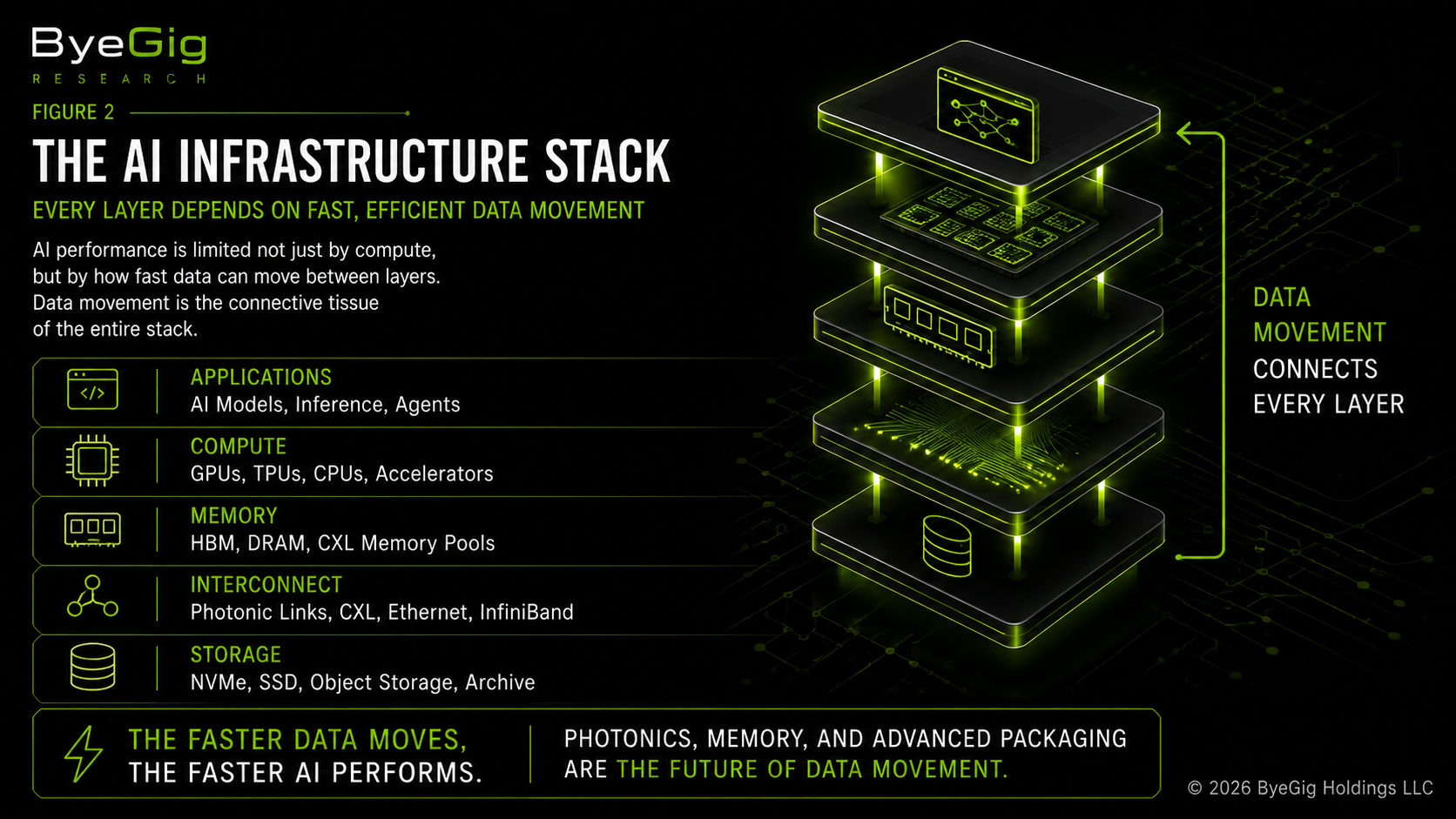
Artificial intelligence has renewed global attention on computing power, but computation alone does not determine AI performance. Modern AI systems spend much of their operational life waiting—not for processors to complete calculations, but for data to arrive. Every model parameter retrieved from memory, every tensor transferred between accelerators, every synchronization across distributed GPUs, and every request traveling through a network consumes time, energy, and infrastructure.
The resulting constraint is no longer computational capacity alone. It is the movement of data.
This challenge is becoming increasingly visible as frontier AI models expand from billions to trillions of parameters and as enterprises deploy AI workloads across geographically distributed infrastructure. Faster processors generate more demand for memory bandwidth. Larger memory systems increase the volume of information moving across servers. Larger clusters require networks capable of synchronizing thousands of accelerators with minimal latency. Improvements in one layer expose bottlenecks in another, making AI infrastructure an increasingly integrated engineering problem rather than a collection of independent hardware components.
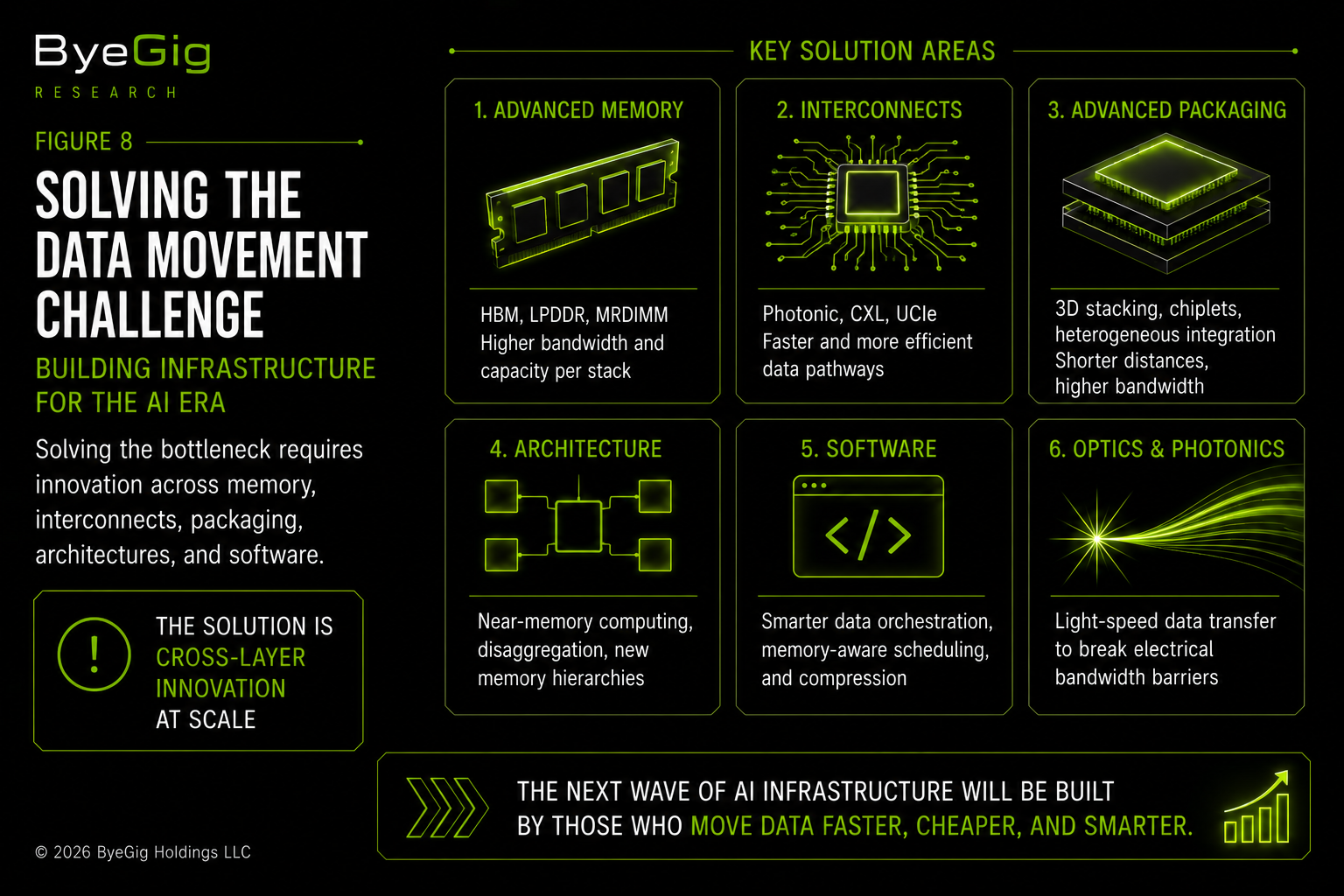
The semiconductor industry is already responding to this transition. High Bandwidth Memory (HBM) has become one of the fastest-growing segments of the memory market because modern AI accelerators require dramatically higher bandwidth than conventional memory architectures can provide. Advanced packaging technologies increasingly position processors and memory within the same package to reduce communication distance and energy consumption. Co-packaged optics and silicon photonics are emerging as potential solutions for moving data efficiently between racks and across large AI clusters. Meanwhile, standards such as Compute Express Link (CXL) seek to make memory itself more flexible by allowing multiple processors to share pooled memory resources rather than relying solely on physically attached DRAM.
Viewed independently, these developments represent advances in semiconductor engineering. Viewed collectively, they reveal a broader architectural transition. Artificial intelligence is changing the economics of computing by making data movement—rather than arithmetic—the defining infrastructure challenge.
Every major computing era has been shaped by its dominant constraint. Early computers were limited by processing capability. Personal computing expanded access to computation. The internet transformed connectivity into infrastructure. Cloud computing abstracted hardware into software-defined resources. Artificial intelligence is introducing another transition, one in which memory, networking, photonics, packaging, and power increasingly determine overall system performance.
The future of AI infrastructure will be measured not only by how quickly processors compute, but by how efficiently entire systems move information.
Computing Has Become Faster Than Data Movement
For much of computing history, processor performance advanced more rapidly than nearly every other component inside a computer system. Successive generations of microprocessors delivered higher clock speeds, greater parallelism, and increasingly sophisticated execution capabilities. Improvements in computation defined progress because processors themselves represented the primary limitation.
That relationship has gradually reversed.
Modern processors rarely spend all of their available time performing calculations. Instead, they frequently wait for instructions, model parameters, intermediate results, or data residing elsewhere within the system. As processors become faster, every delay associated with retrieving information becomes proportionally more expensive. The faster computation advances, the more valuable efficient data movement becomes.
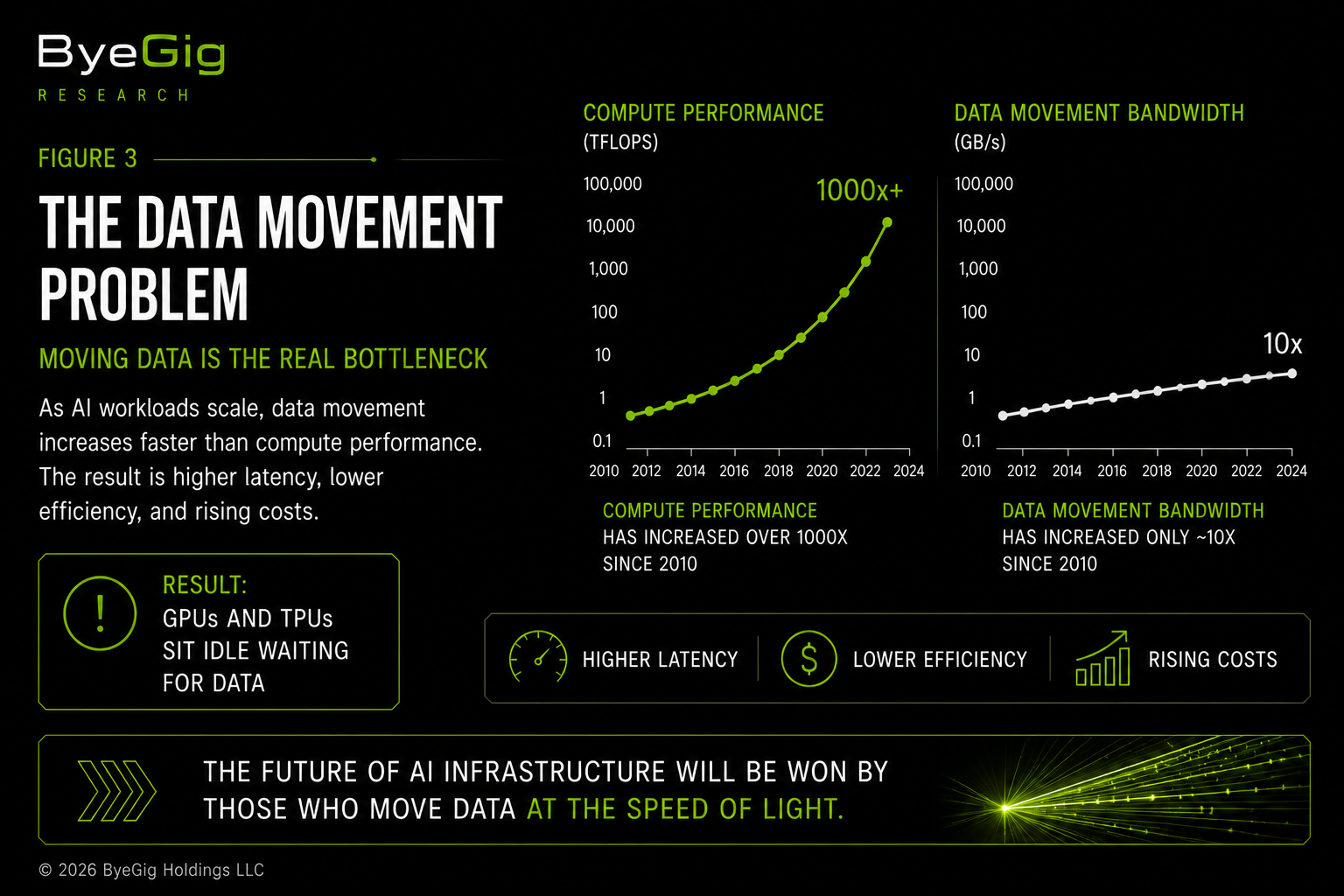
This challenge has become particularly evident in artificial intelligence. Unlike traditional enterprise software, large language models and other deep learning systems continuously exchange enormous volumes of information between processors, memory, storage devices, and networking equipment. Training a frontier-scale model requires not only trillions of mathematical operations but also the coordinated movement of vast quantities of data across thousands of accelerators operating simultaneously.
The result is an important shift in perspective. Artificial intelligence is often described as a computational problem because the calculations themselves are extraordinarily demanding. At system scale, however, computation represents only one component of overall performance. Every calculation depends upon data arriving at precisely the right location, at precisely the right time, across an increasingly complex infrastructure.
The engineering challenge is no longer maximizing processor performance in isolation. It is minimizing the cost, latency, and energy required to move information throughout the system.
Memory Has Become Strategic Infrastructure
Every processor operates within the limits imposed by memory.
Artificial intelligence has amplified this relationship because modern models require extraordinary volumes of parameters, intermediate activations, training data, and inference context to remain immediately accessible. Retrieving this information efficiently often determines overall system performance more than increasing raw computational capability.
Traditional DRAM architectures were designed for general-purpose computing environments in which processors performed relatively balanced workloads. AI accelerators operate differently. Thousands of parallel execution units consume data simultaneously, creating bandwidth requirements that conventional memory technologies struggle to satisfy.
This demand has elevated High Bandwidth Memory from a specialized semiconductor product into one of the industry’s most strategically important technologies. Rather than placing memory modules at greater physical distances from processors, HBM stacks multiple memory dies vertically and connects them using Through-Silicon Vias (TSVs). The resulting architecture provides dramatically greater bandwidth while reducing communication distance between memory and compute.
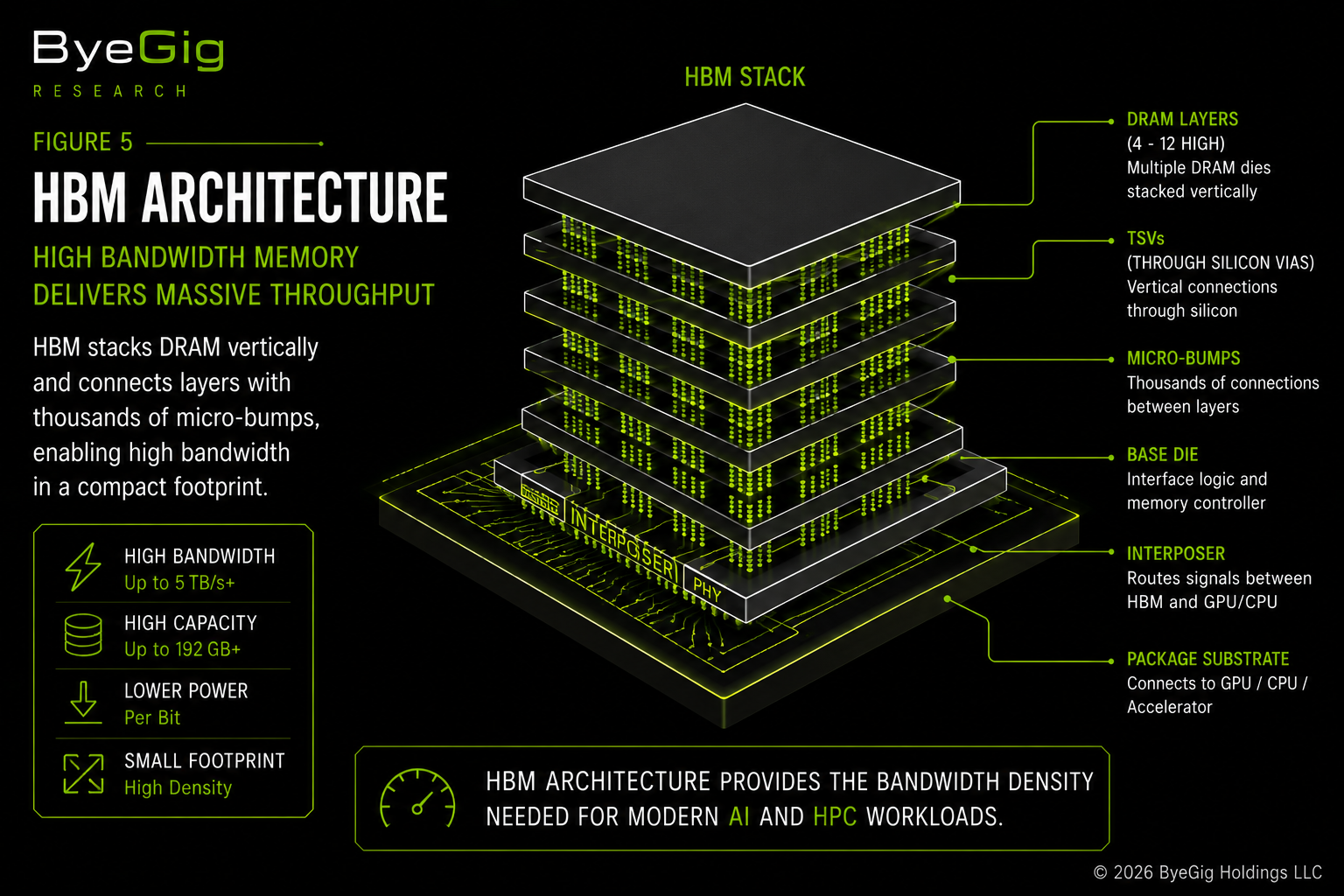
The significance extends beyond faster hardware.
HBM represents a broader shift toward minimizing physical separation between processing and memory. As AI workloads continue expanding, reducing the distance information must travel becomes increasingly valuable because every additional millimeter introduces latency, consumes energy, and limits system efficiency.
This architectural trend explains why advanced memory has become a strategic priority across the semiconductor industry. Memory is no longer simply a component attached to processors. Increasingly, it functions as an integral part of the computing system itself.
Advanced Packaging Is Redefining System Architecture
For decades, improvements in semiconductor performance focused primarily on shrinking transistors. Moore’s Law delivered remarkable gains by increasing transistor density and reducing manufacturing dimensions. Although transistor scaling remains important, modern AI systems increasingly derive performance improvements from how chips are assembled rather than solely from how individual transistors are fabricated.
Advanced packaging has emerged as one of the defining technologies supporting this transition.
Rather than manufacturing increasingly larger monolithic processors, semiconductor companies are assembling multiple specialized components within a single package. High-performance processors, memory stacks, input-output controllers, networking interfaces, and accelerator chiplets can now be integrated into highly optimized systems designed specifically for AI workloads.
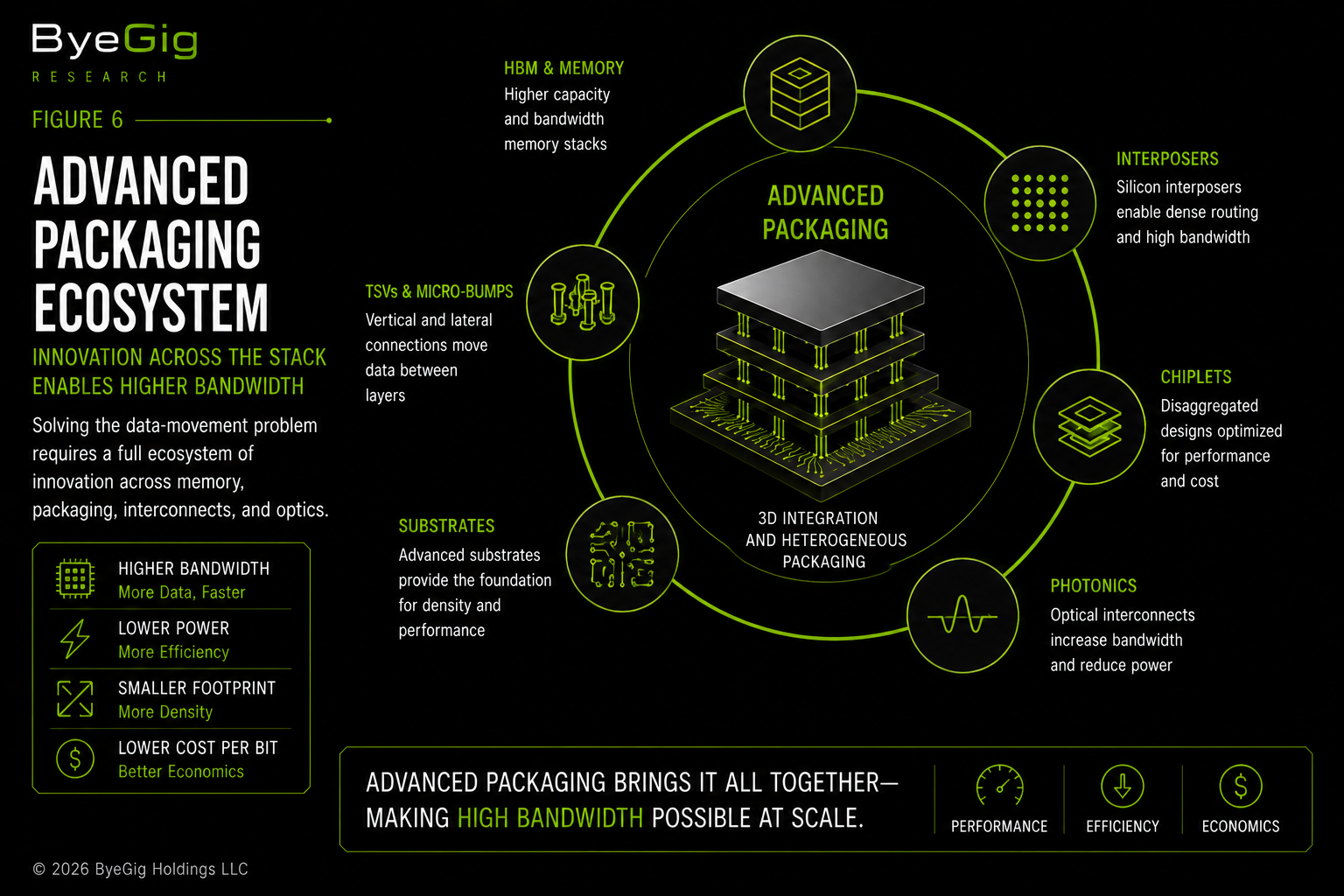
This approach offers several advantages. Shorter electrical pathways reduce latency. Lower communication distances decrease energy consumption. Individual components can be manufactured using different process technologies optimized for their specific functions. System designers gain greater flexibility while avoiding some of the manufacturing challenges associated with producing ever-larger monolithic dies.
The importance of packaging reflects a broader principle. Artificial intelligence increasingly rewards system-level optimization rather than isolated component improvements. Processor performance remains essential, but processors no longer determine system performance independently.
Infrastructure has become architectural.
The Memory Wall Is Becoming an Infrastructure Problem
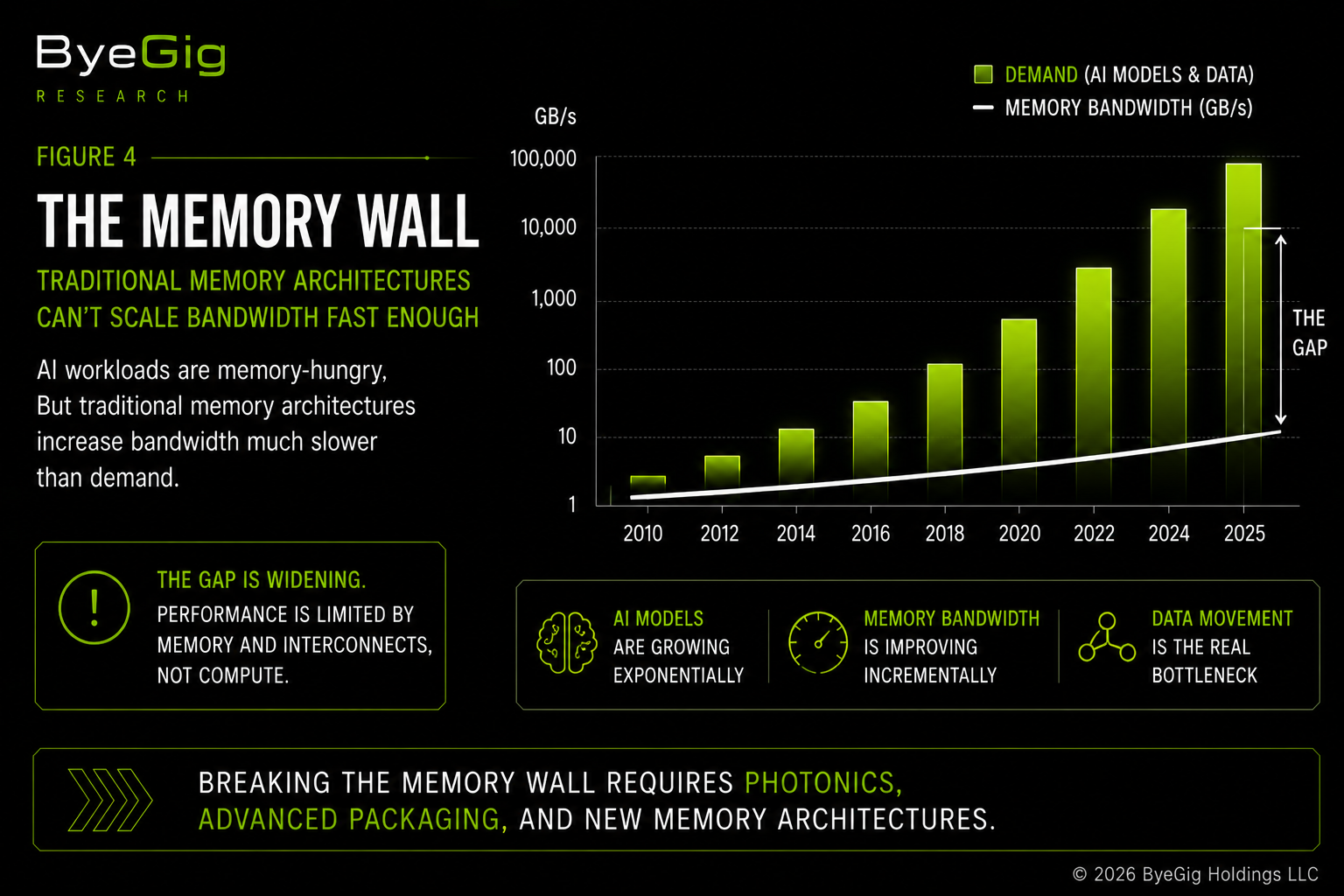
Computer architects have long described the growing imbalance between processor performance and memory access as the “memory wall.” As processors become faster, improvements in memory latency and bandwidth fail to keep pace, leaving increasingly capable processors waiting for data instead of performing calculations.
Artificial intelligence has transformed what was once primarily an engineering concern into a strategic infrastructure challenge.
Large-scale AI clusters may contain thousands of accelerators operating simultaneously across multiple servers and racks. Every synchronization event requires data to move through increasingly sophisticated networking equipment. Every distributed training step depends upon processors receiving updated parameters with minimal delay. Every additional bottleneck reduces utilization across the entire cluster rather than affecting a single processor.
The consequence is that memory efficiency can no longer be evaluated only within individual servers. Memory architecture increasingly determines the performance of entire data centers.
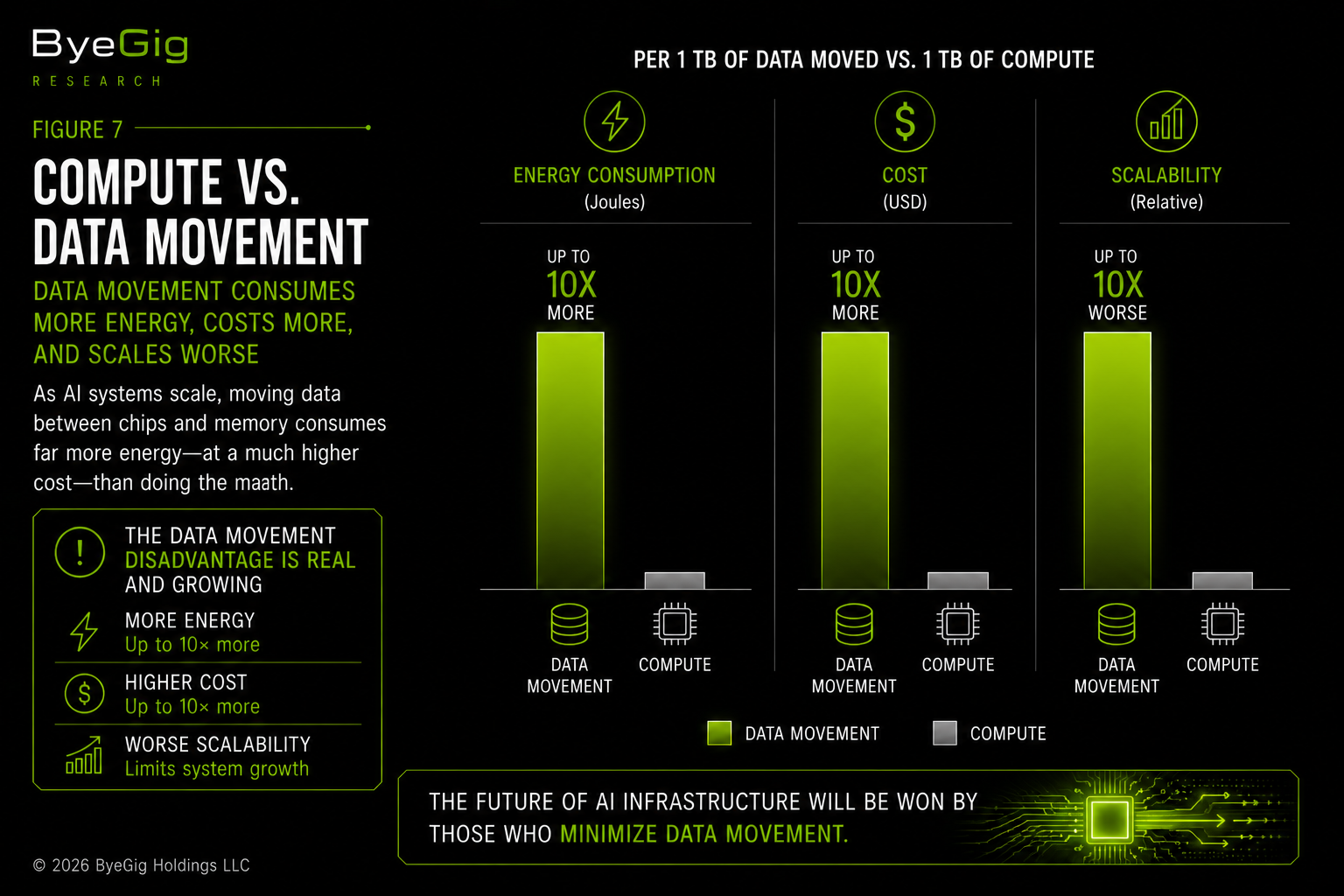
This evolution explains the industry’s growing interest in technologies that improve memory utilization at system scale. Faster memory addresses only part of the problem. Shared memory architectures, intelligent memory allocation, and dynamic resource pooling seek to improve how memory itself is deployed across increasingly distributed computing environments.
The objective is no longer simply adding capacity.
It is ensuring that capacity remains accessible wherever computation requires it.
CXL Extends Memory Beyond Individual Servers
Compute Express Link (CXL) represents one of the industry’s most significant attempts to rethink memory architecture for modern computing environments.
Historically, server memory has remained physically attached to individual processors. This model simplifies system design but frequently results in inefficient resource utilization. Some servers exhaust available memory while others leave substantial capacity unused. Scaling applications often requires purchasing additional hardware even when memory already exists elsewhere within the infrastructure.
CXL introduces an alternative approach by allowing processors to access shared memory resources connected through standardized high-speed interconnects. Instead of treating memory as permanently bound to individual servers, organizations can increasingly view memory as an infrastructure resource capable of being allocated dynamically according to workload requirements.
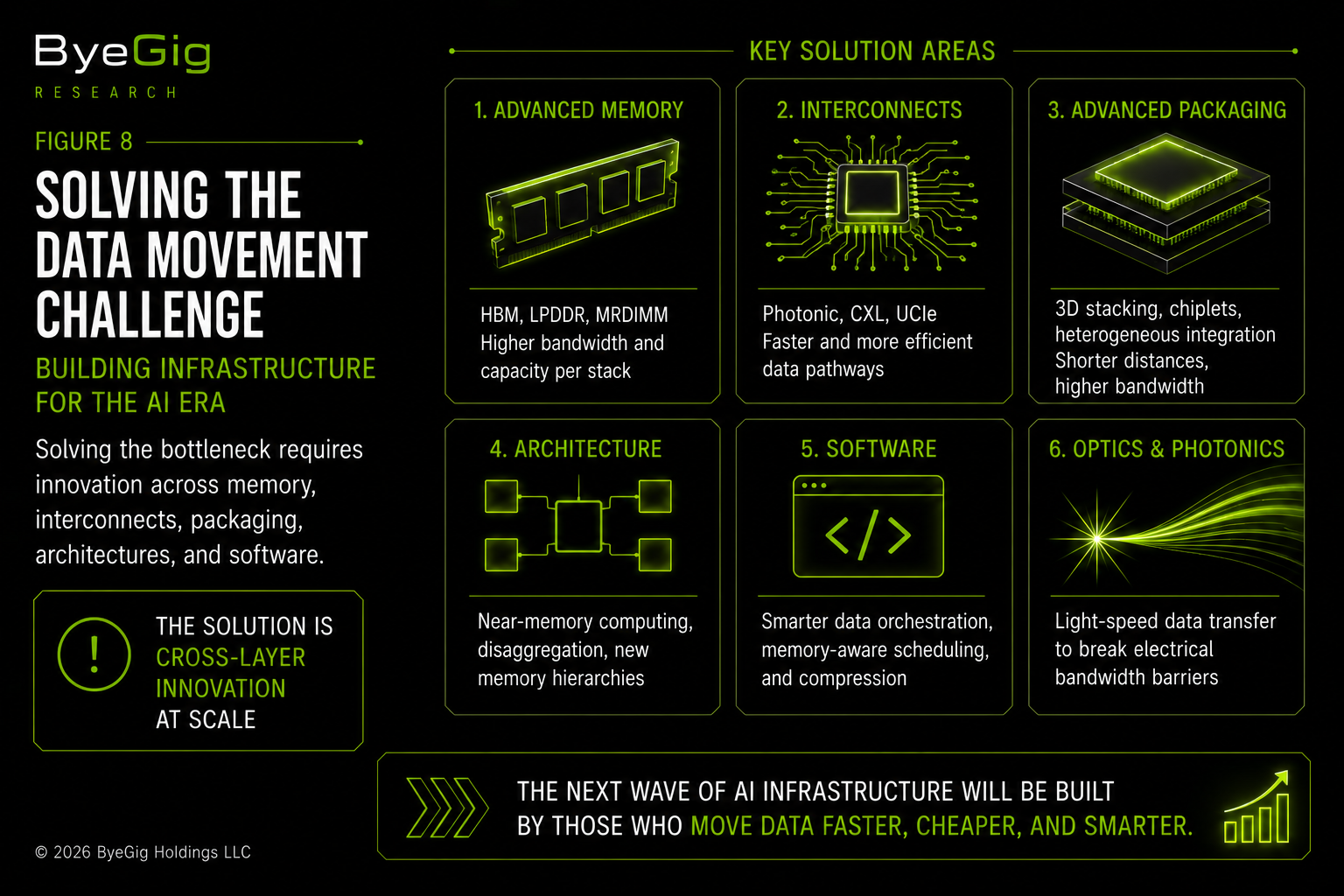
The architectural significance extends beyond efficiency.
Artificial intelligence workloads vary substantially in memory demand depending upon model size, inference complexity, and concurrent utilization. Flexible memory allocation reduces infrastructure fragmentation while improving utilization across large computing environments.
The concept parallels earlier transitions in virtualization and cloud computing. Compute resources became software-defined. Storage became software-defined. Increasingly, memory is following the same trajectory.
The objective is not merely larger memory pools.
It is more intelligent infrastructure.
Silicon Photonics Reduces the Cost of Distance
Electrical communication has served computing exceptionally well for decades, but electrical signals encounter increasing limitations as data volumes continue expanding across AI infrastructure.
Longer distances require greater power.
Higher frequencies generate more heat.
Greater bandwidth increases signal integrity challenges.
Silicon photonics addresses these constraints by transmitting information using light rather than electrical signals for portions of the communication pathway. Optical communication offers substantially higher bandwidth over longer distances while reducing power consumption relative to conventional electrical interconnects.
For hyperscale AI infrastructure, these advantages become increasingly meaningful.
Training clusters containing thousands of accelerators exchange extraordinary volumes of information between servers, networking equipment, and storage systems. As cluster sizes expand, communication overhead consumes a growing proportion of overall system performance. Reducing the energy and latency associated with these transfers directly improves infrastructure efficiency.
Photonics therefore represents more than another semiconductor technology.
It addresses one of artificial intelligence’s defining architectural constraints: moving information efficiently as infrastructure scales beyond the physical limits of traditional electrical communication.
AI Is Becoming an Infrastructure Optimization Problem
Public discussion surrounding artificial intelligence often emphasizes increasingly powerful processors. Processor performance remains essential, but AI infrastructure is becoming progressively less dependent upon any single component.
Every improvement introduces new constraints elsewhere.
Faster accelerators require greater memory bandwidth.
Larger memory systems demand improved packaging.
More powerful servers increase networking requirements.
Expanding clusters elevate the importance of photonics, cooling, and power distribution.
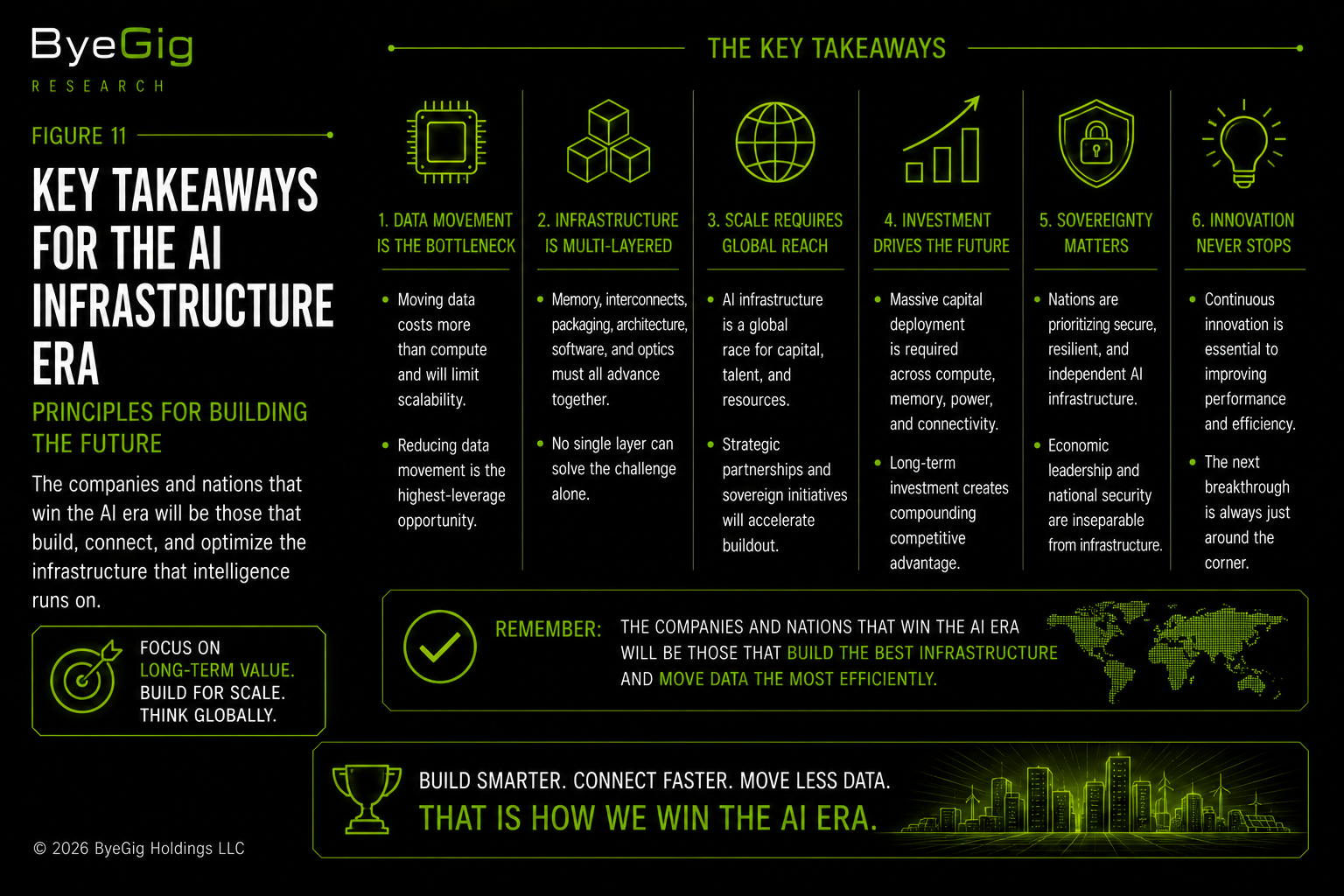
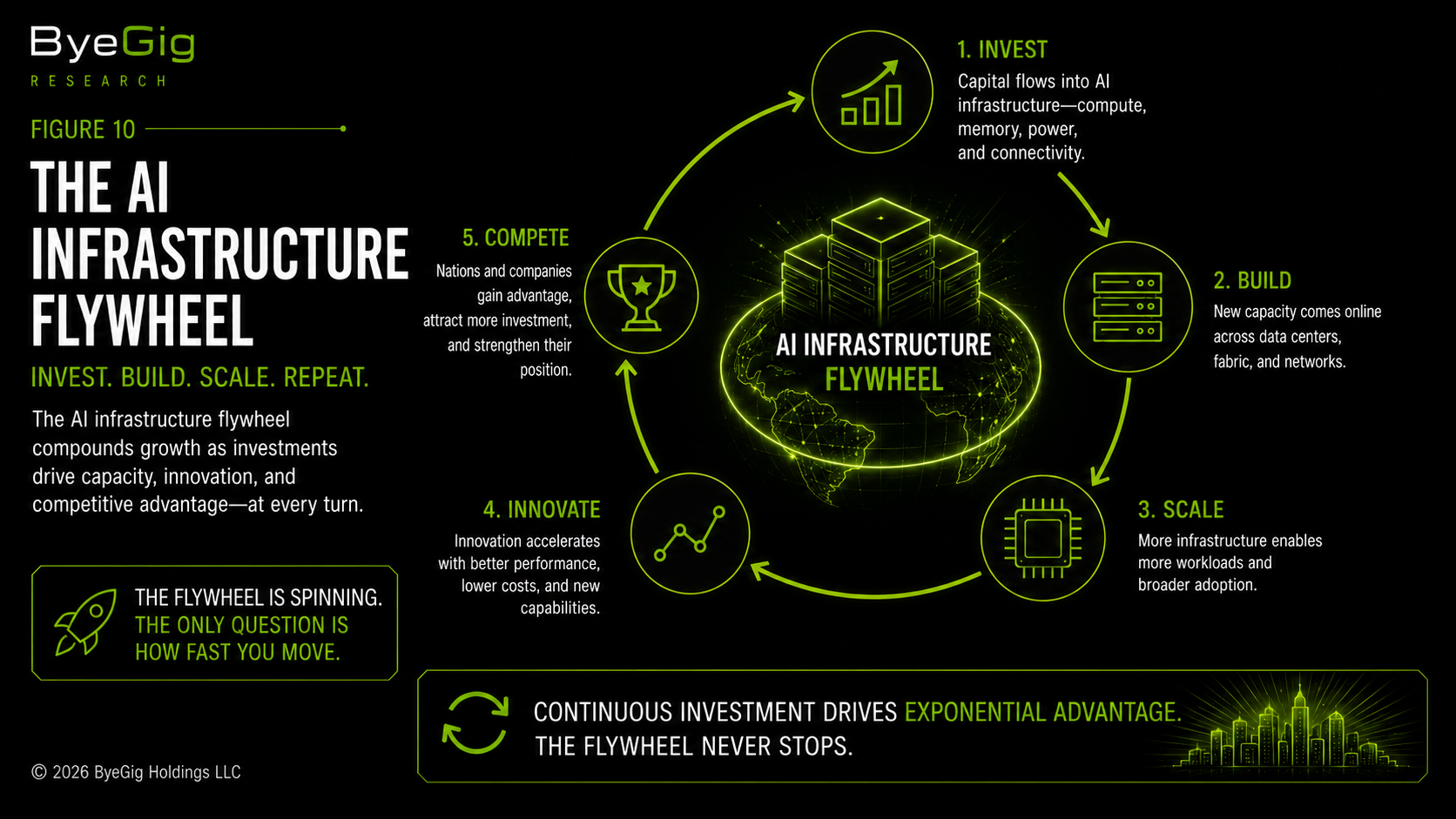
Progress increasingly emerges from optimizing entire systems rather than maximizing individual technologies.

This pattern has appeared repeatedly throughout the history of computing. As technologies mature, competitive advantage shifts away from isolated components toward architectural integration. Artificial intelligence appears to be following the same trajectory.
The companies shaping the next generation of AI infrastructure will not necessarily be those producing the fastest processors alone. Increasingly, leadership will depend upon integrating compute, memory, networking, packaging, photonics, power, and software into coherent systems capable of operating efficiently at unprecedented scale.
Conclusion
Artificial intelligence is frequently described as a revolution in computing. In practice, it may prove equally significant as a revolution in infrastructure.
The industry’s immediate attention has centered on processors because computational demand expanded faster than existing hardware could accommodate. That imbalance is gradually giving way to a different reality. As computational capacity continues increasing, the movement of information increasingly determines overall system performance.
Memory, packaging, networking, photonics, power delivery, and software orchestration are no longer supporting technologies surrounding computation. They are becoming integral components of computation itself.
Every major computing transition has elevated a different infrastructure layer. The internet elevated networking. Cloud computing elevated distributed identity and virtualization. Artificial intelligence is elevating the systems responsible for moving information efficiently through increasingly complex computing environments.
The defining question is no longer how quickly processors can calculate.
It is how effectively entire infrastructures can move data.