
AI Security Is Becoming a Machine-Identity Market
Why Identity Is Emerging as the Next Infrastructure Layer for Enterprise AI
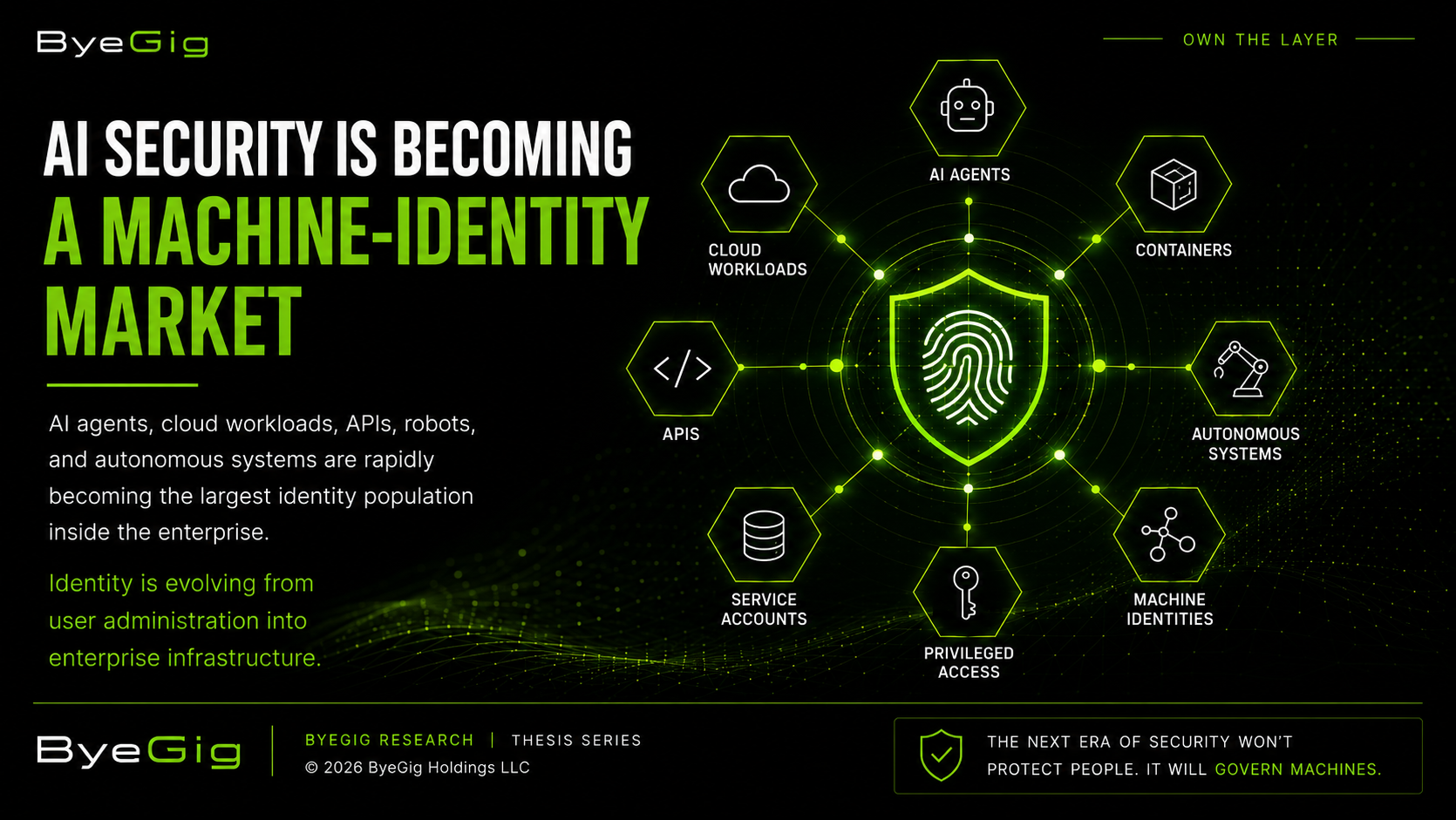
Executive Summary
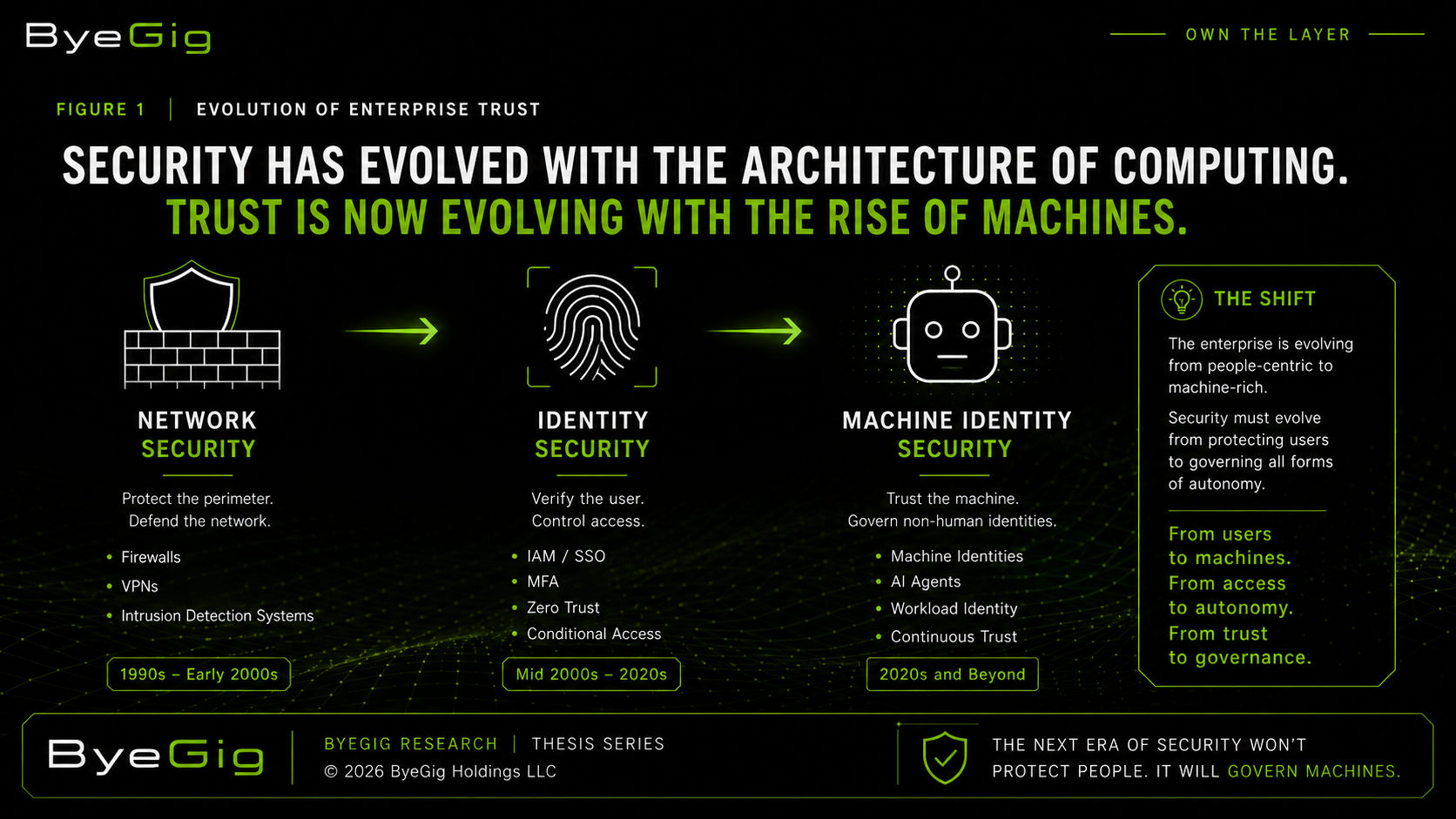
Enterprise cybersecurity has entered another architectural transition. Previous generations of security were largely defined by changes in computing itself. Mainframes emphasized physical access controls because computing resources were centralized. Client-server networks shifted attention toward perimeter security as organizations connected employees through local area networks and, eventually, the public internet. Cloud computing dissolved those perimeters and elevated identity into the primary control layer, giving rise to Identity and Access Management (IAM), Single Sign-On (SSO), Multi-Factor Authentication (MFA), and Zero Trust architectures.
Artificial intelligence is extending that progression rather than replacing it.
The defining characteristic of enterprise AI is not simply that software has become more capable. It is that software is increasingly becoming an independent participant inside enterprise systems. AI agents retrieve documents, analyze contracts, generate software, coordinate workflows, communicate with APIs, monitor infrastructure, and interact with other software without requiring continuous human direction. Every one of these actions requires authentication. Every action requires authorization. Every action depends upon trust.
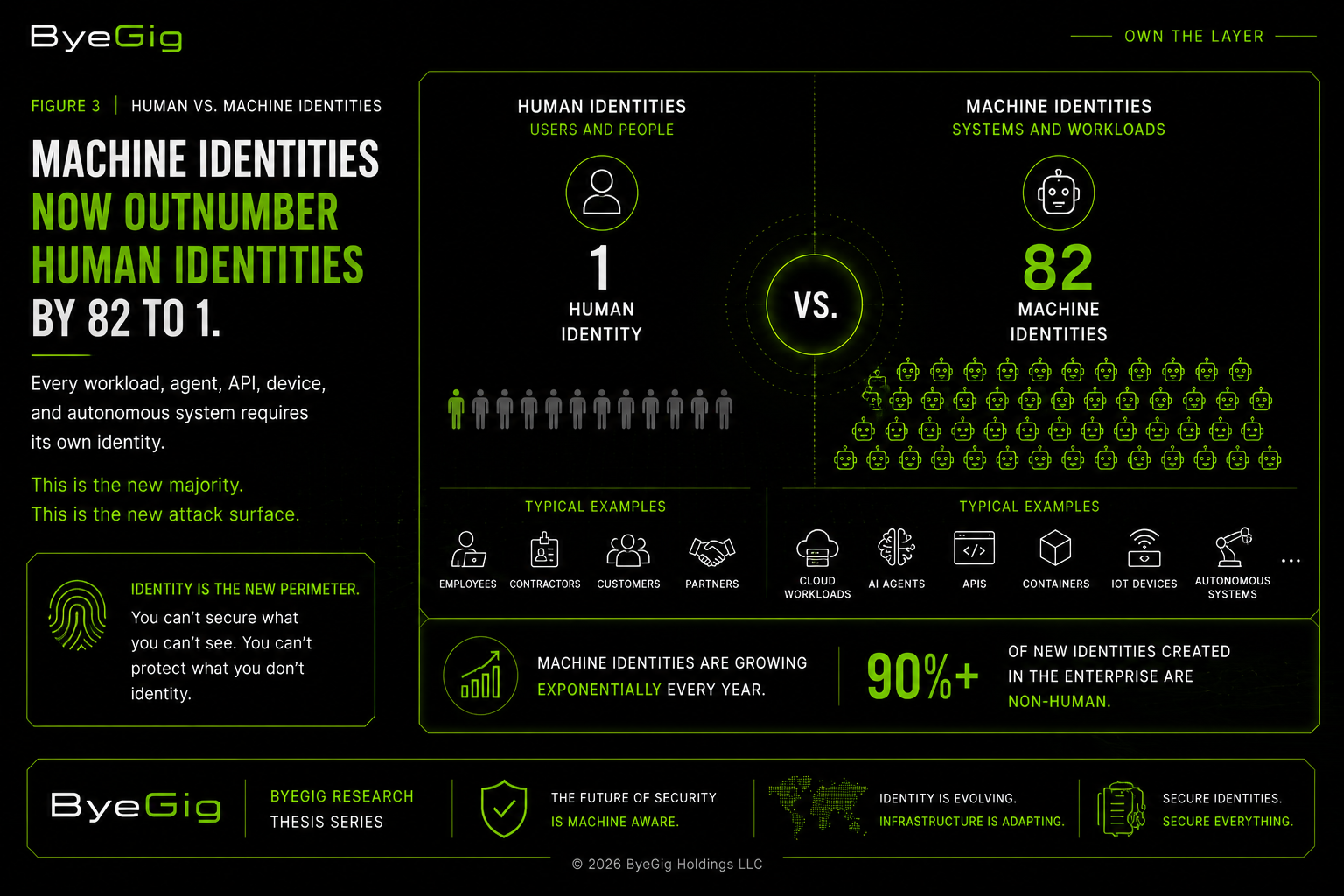
This change is already measurable. CyberArk’s 2025 Identity Security Landscape found that organizations now manage 82 machine identities for every human identity, a dramatic increase driven by cloud-native infrastructure, automation, containers, and AI-enabled workloads. The same research found that 42 percent of machine identities possess privileged or sensitive access, while 87 percent of organizations experienced two or more identity-related breaches during the previous year.
Viewed independently, these statistics describe an operational challenge. Viewed collectively alongside the rapid adoption of AI agents, cloud-native infrastructure, robotic process automation, and software-defined enterprises, they point toward something larger. Identity is evolving from an administrative function into operational infrastructure. Organizations are no longer governing only employees. Increasingly, they are governing autonomous systems.
The significance extends well beyond cybersecurity. Every major transition in enterprise computing has produced a new control layer. Networking required routers and firewalls. Cloud computing required identity platforms capable of authenticating users across distributed environments. Artificial intelligence appears to be creating another such layer, one designed to establish trust among machines operating continuously, autonomously, and at unprecedented scale.
Identity Has Always Reflected the Architecture of Computing
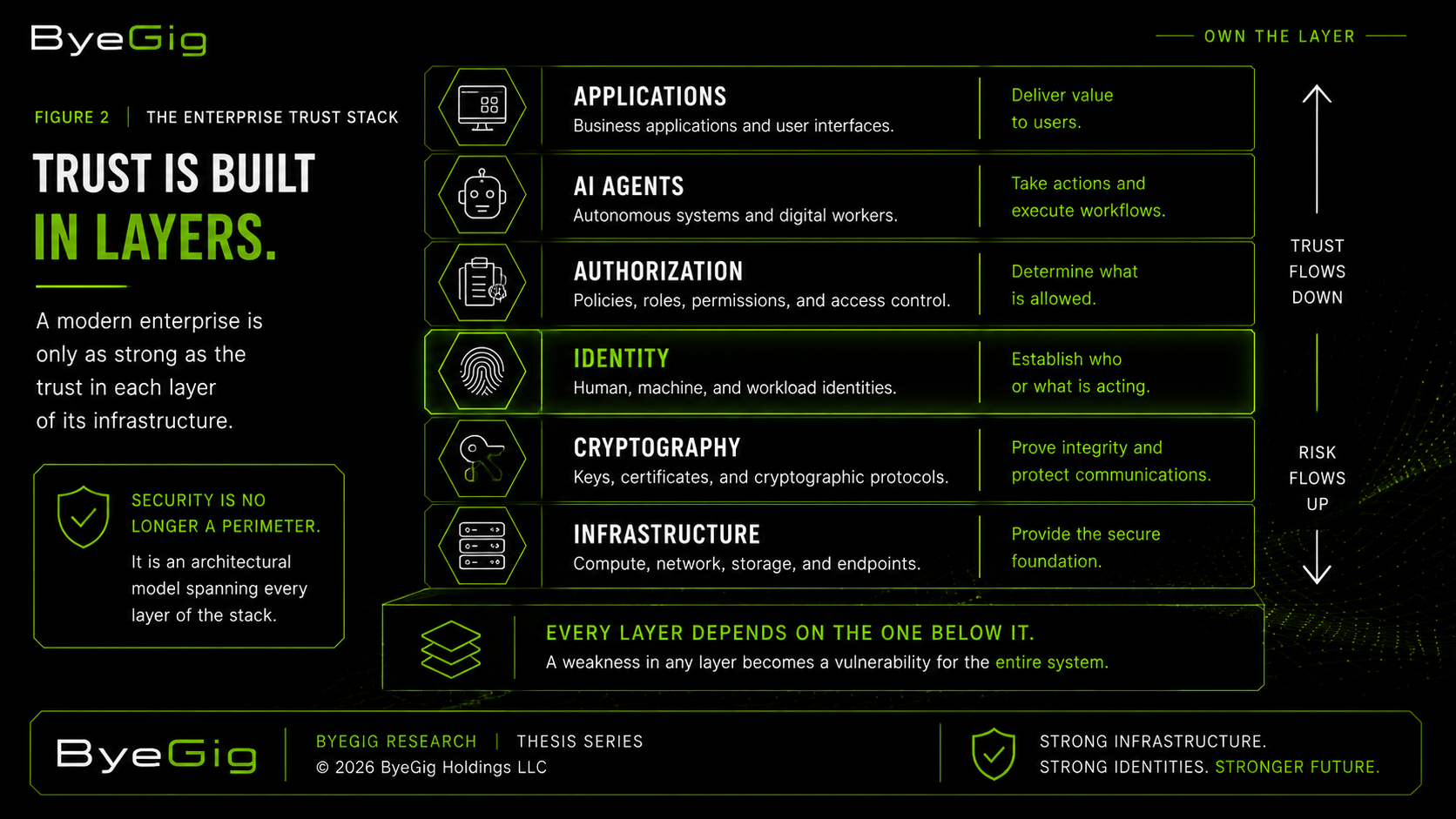
Cybersecurity rarely evolves independently. Throughout the history of enterprise technology, security architecture has generally followed computing architecture rather than leading it. As organizations adopted new ways of building and operating software, security models adapted to address new risks introduced by those architectural changes.
During the client-server era, enterprise systems existed primarily within corporate offices connected through privately managed networks. Firewalls, intrusion detection systems, and virtual private networks formed the backbone of enterprise security because the network itself represented the primary trust boundary. If traffic originated inside the corporate environment, it was generally assumed to be more trustworthy than traffic originating elsewhere.
That assumption became increasingly difficult to maintain as organizations migrated toward cloud computing. Applications moved beyond corporate data centers, employees began working remotely, and businesses adopted dozens, or sometimes hundreds, of cloud-based software services. Identity gradually replaced network location as the primary method of establishing trust. Rather than asking where a user was located, organizations increasingly asked whether that user had been authenticated, what permissions they possessed, and whether their request aligned with organizational policy.
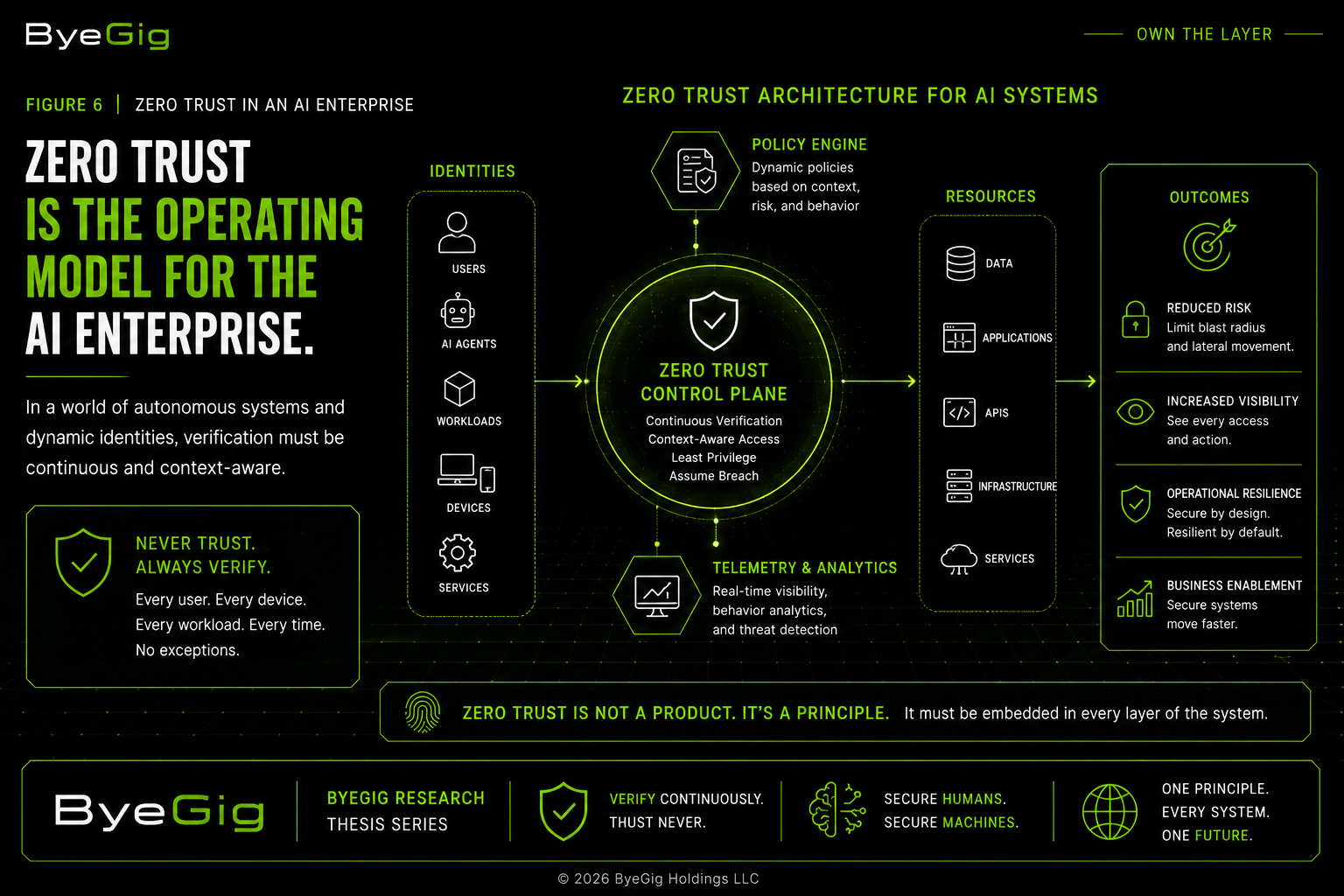
This architectural transition ultimately produced Zero Trust, a security model that rejects implicit trust based on network location alone. In its influential publication Zero Trust Architecture (Special Publication 800-207), the National Institute of Standards and Technology states that “no implicit trust is granted to assets or user accounts based solely on their physical or network location.” Although the publication predates the widespread deployment of generative AI, its underlying principle has become increasingly relevant as enterprise systems rely upon autonomous software rather than solely human users.
Artificial intelligence does not invalidate Zero Trust. It expands its scope.
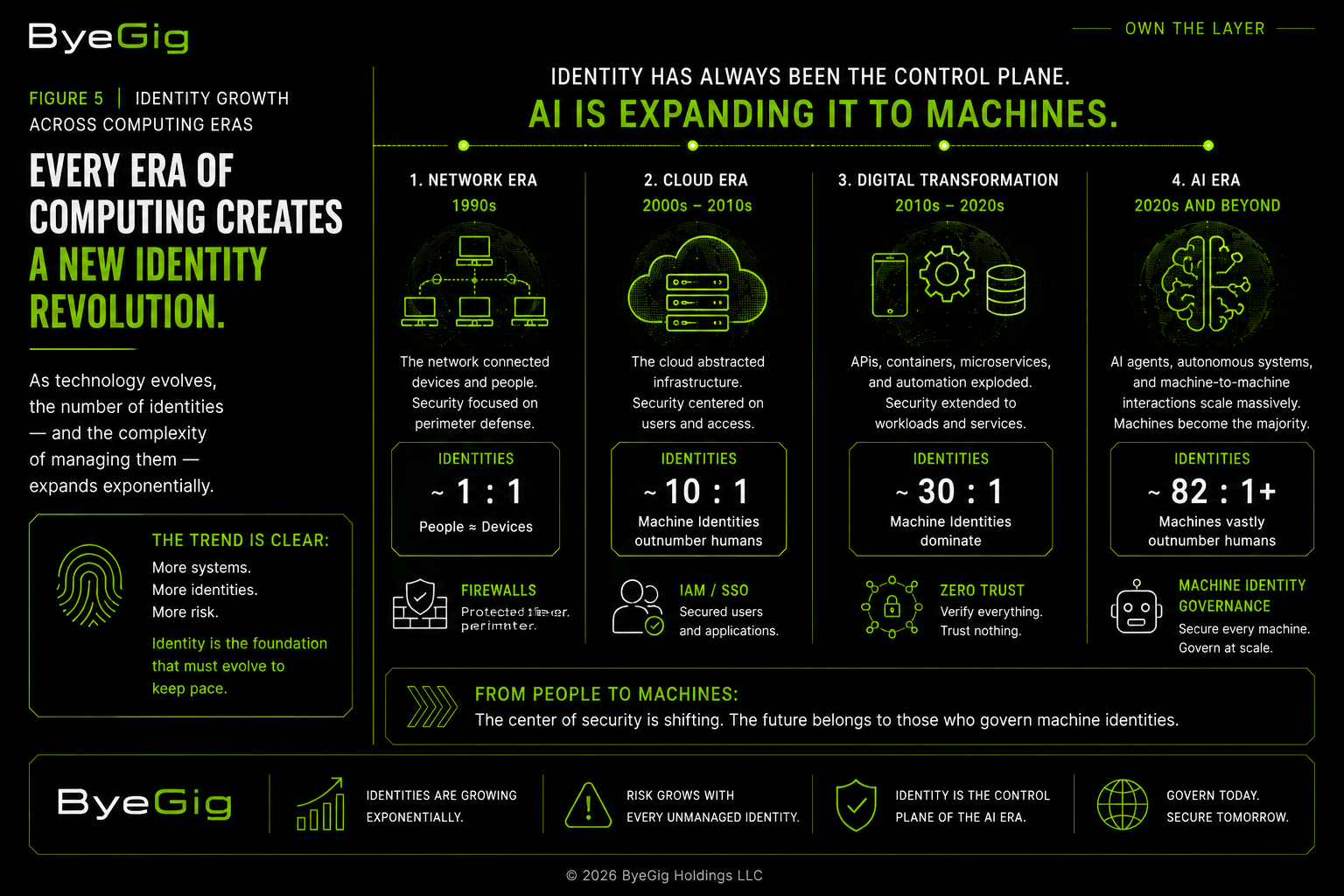
Organizations are no longer authenticating only employees accessing applications. Increasingly, they must authenticate software communicating with software, autonomous agents executing workflows, cloud workloads interacting with infrastructure, and AI systems performing business operations without direct human intervention.
The security model remains centered on identity. The population requiring identities, however, has fundamentally changed.
The Fastest-Growing Population Inside the Enterprise Is No Longer Human
Most organizations maintain accurate records describing their workforce. Human Resources departments can identify how many employees work within the organization, their reporting structures, and the systems to which they have access. Machine identities rarely receive the same visibility, despite growing substantially faster than human populations.
Machine identities encompass a broad range of non-human entities capable of authenticating themselves within enterprise environments. These include service accounts, cloud workloads, containers, Kubernetes clusters, APIs, virtual machines, software bots, robotic process automation platforms, digital certificates, cryptographic keys, Internet of Things (IoT) devices, and increasingly, AI agents. Some exist for years, while others are created automatically during software deployment and disappear within minutes.
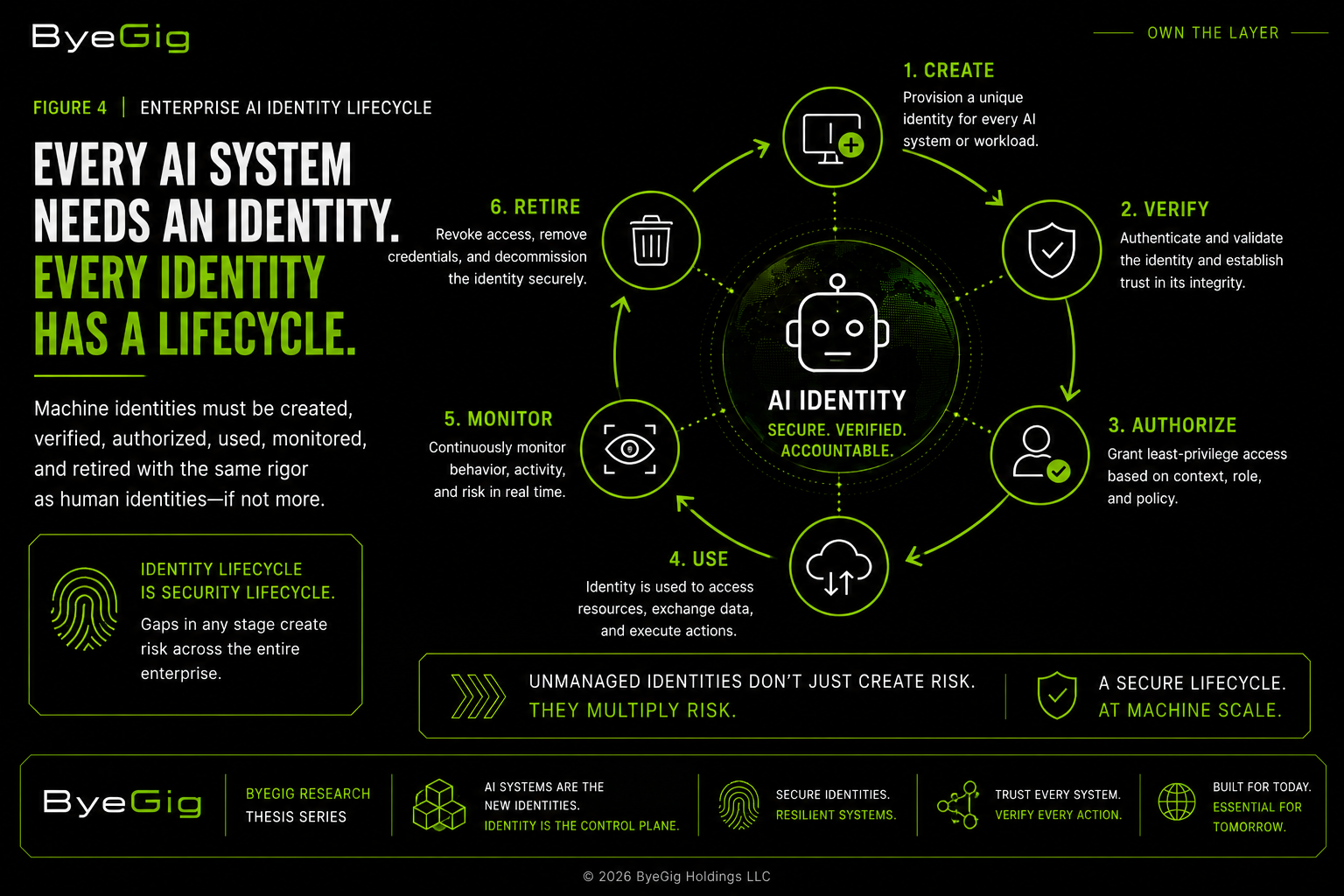
Unlike employee accounts, machine identities scale with infrastructure rather than organizational headcount. Expanding cloud capacity may automatically create hundreds or thousands of new identities. Modern software development pipelines routinely provision temporary infrastructure, deploy applications, rotate credentials, and destroy resources without requiring direct administrative involvement. Artificial intelligence accelerates this process further by introducing autonomous systems capable of interacting with multiple enterprise services simultaneously.
CyberArk’s research illustrates the magnitude of this shift. Its 2025 global survey found that organizations now manage approximately 82 machine identities for every human identity, reflecting years of growth in cloud computing, automation, and software-defined infrastructure. More significantly, nearly half of those identities possess privileged or otherwise sensitive access capable of affecting production systems or critical enterprise operations.
The numerical ratio itself is noteworthy, but the architectural implication is considerably more important. Identity systems originally designed to administer relatively stable employee populations are increasingly expected to govern millions of digital entities that appear, disappear, authenticate, communicate, and make decisions continuously.
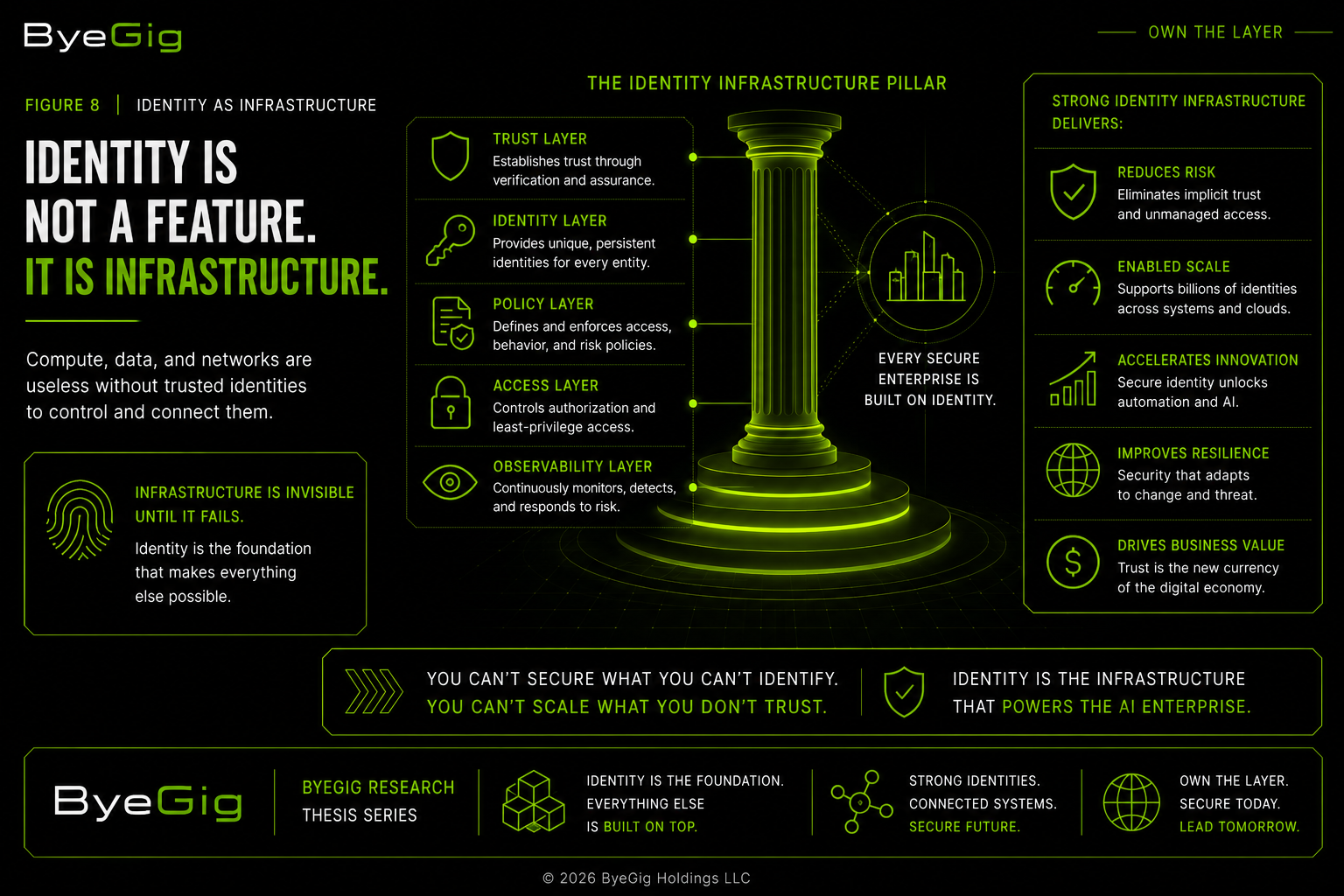
Identity administration has become identity infrastructure.
Artificial Intelligence Changes the Nature of Identity
Artificial intelligence did not invent machine identities. Cloud computing had already shifted enterprise architecture toward software-defined infrastructure long before generative AI entered mainstream business use. Microservices, APIs, containers, and automated deployment pipelines all contributed to an environment in which machines increasingly communicated directly with other machines.
Artificial intelligence changes the character of those interactions.
Traditional enterprise software generally executes predefined instructions within narrowly defined operational boundaries. AI systems increasingly perform tasks requiring reasoning, adaptation, and interaction across multiple business systems. A single AI agent may retrieve documents from a knowledge repository, analyze contractual language, access customer records through a CRM platform, generate software code, query financial databases, schedule meetings, summarize technical reports, and communicate results to additional software agents, all without continuous human supervision.
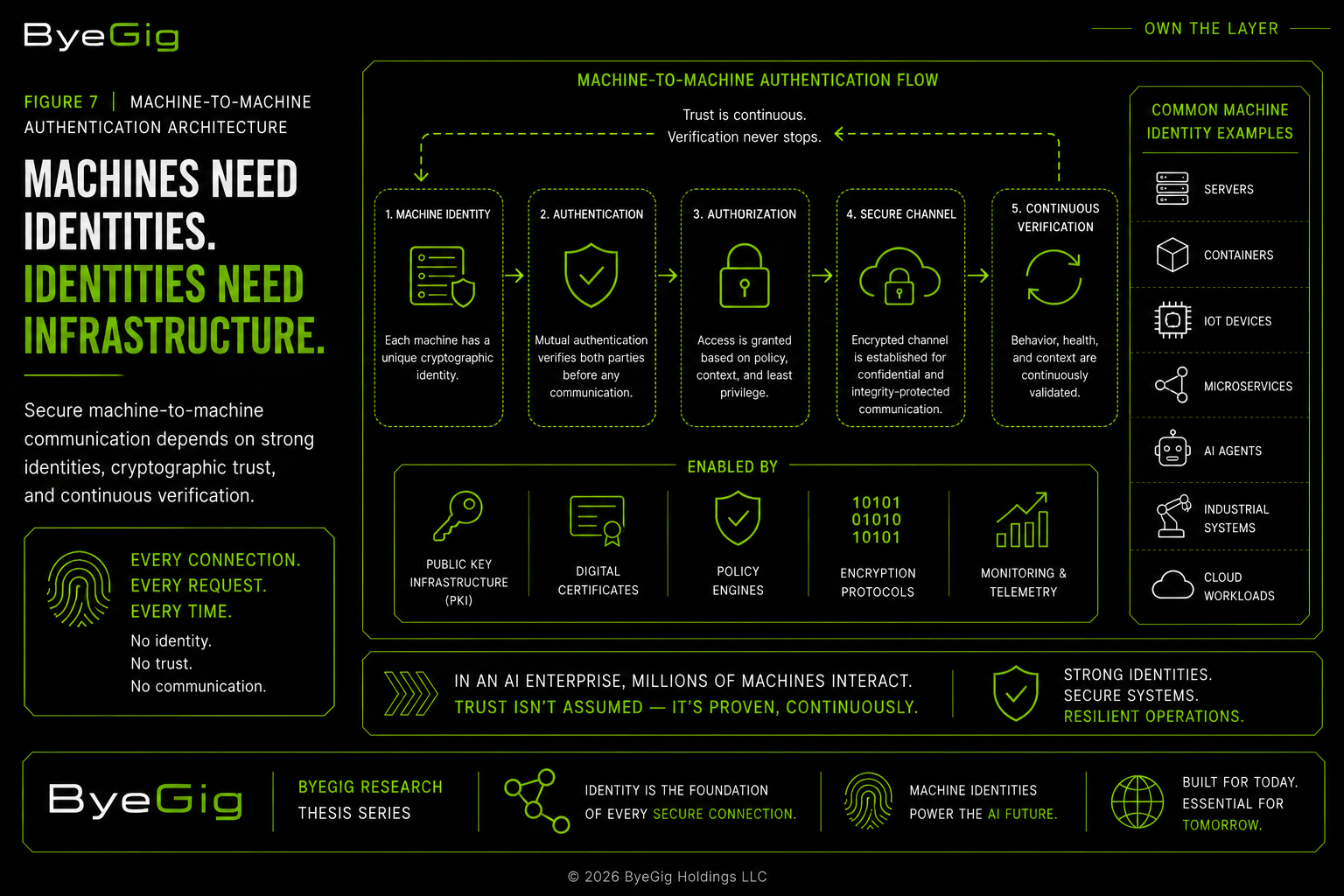
Each interaction requires authentication.
Each interaction requires authorization.
Each interaction creates another trusted participant inside the enterprise.
The security challenge therefore extends beyond protecting data from unauthorized access. Organizations must determine how autonomous systems establish trust, receive permissions, interact with sensitive resources, and operate safely alongside human employees.
The question facing enterprise security teams is no longer simply, Which employees should receive access to enterprise systems?
Increasingly, the question becomes, Which machines should be trusted to act on behalf of the enterprise, under what conditions, and with what authority?
ByeGig
