
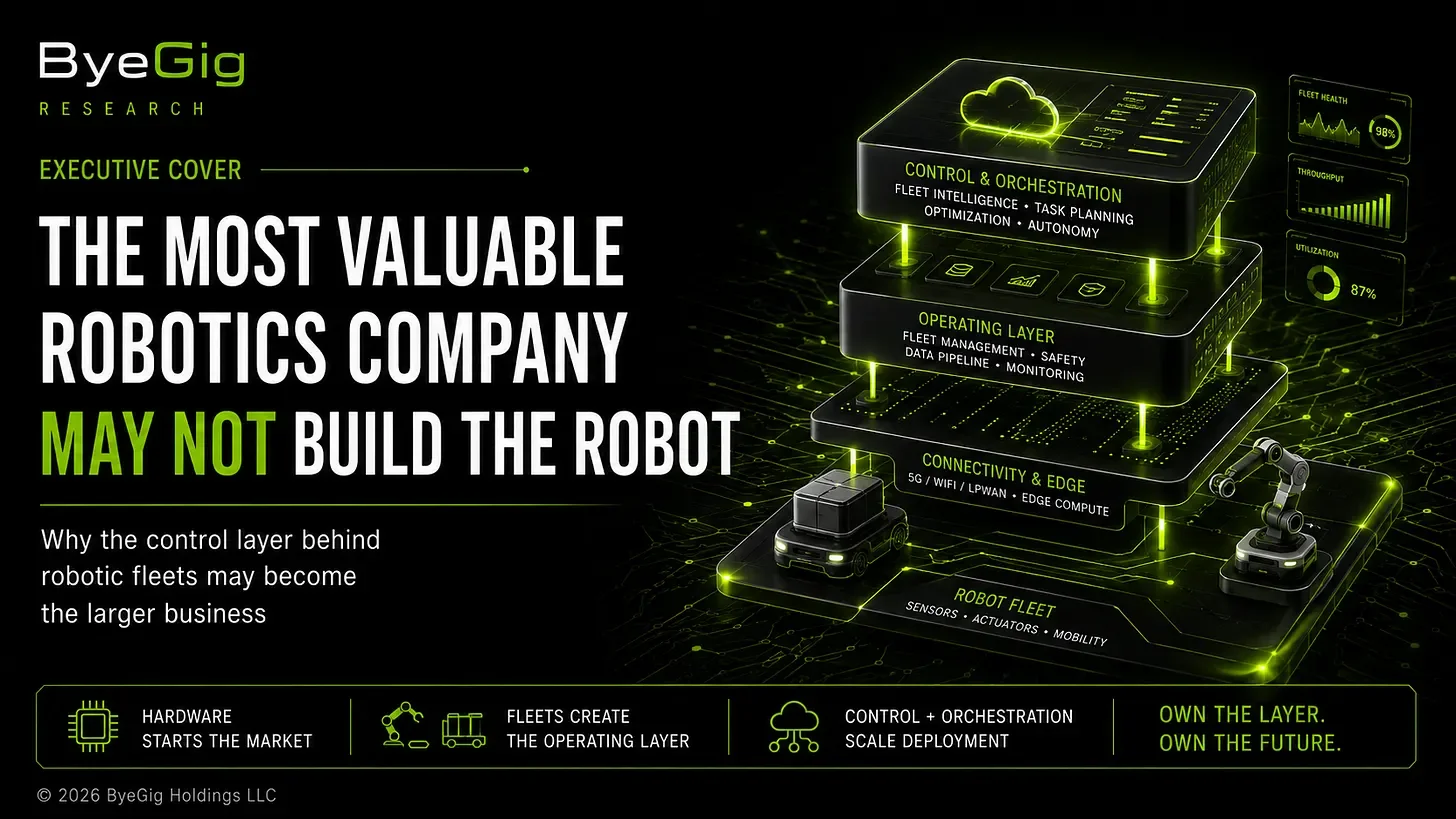
The Most Valuable Robotics Company May Not Build the Robot
The physical machine attracts the attention. The systems coordinating fleets, workloads, charging, routing, and control may create the larger category.
ByeGig
Robotics is still presented largely as a hardware competition. Companies demonstrate faster movement, better dexterity, improved vision, longer battery life, and the ability to perform tasks that would have been unrealistic only a few years ago. These advances are necessary, but they represent only the visible part of the market.
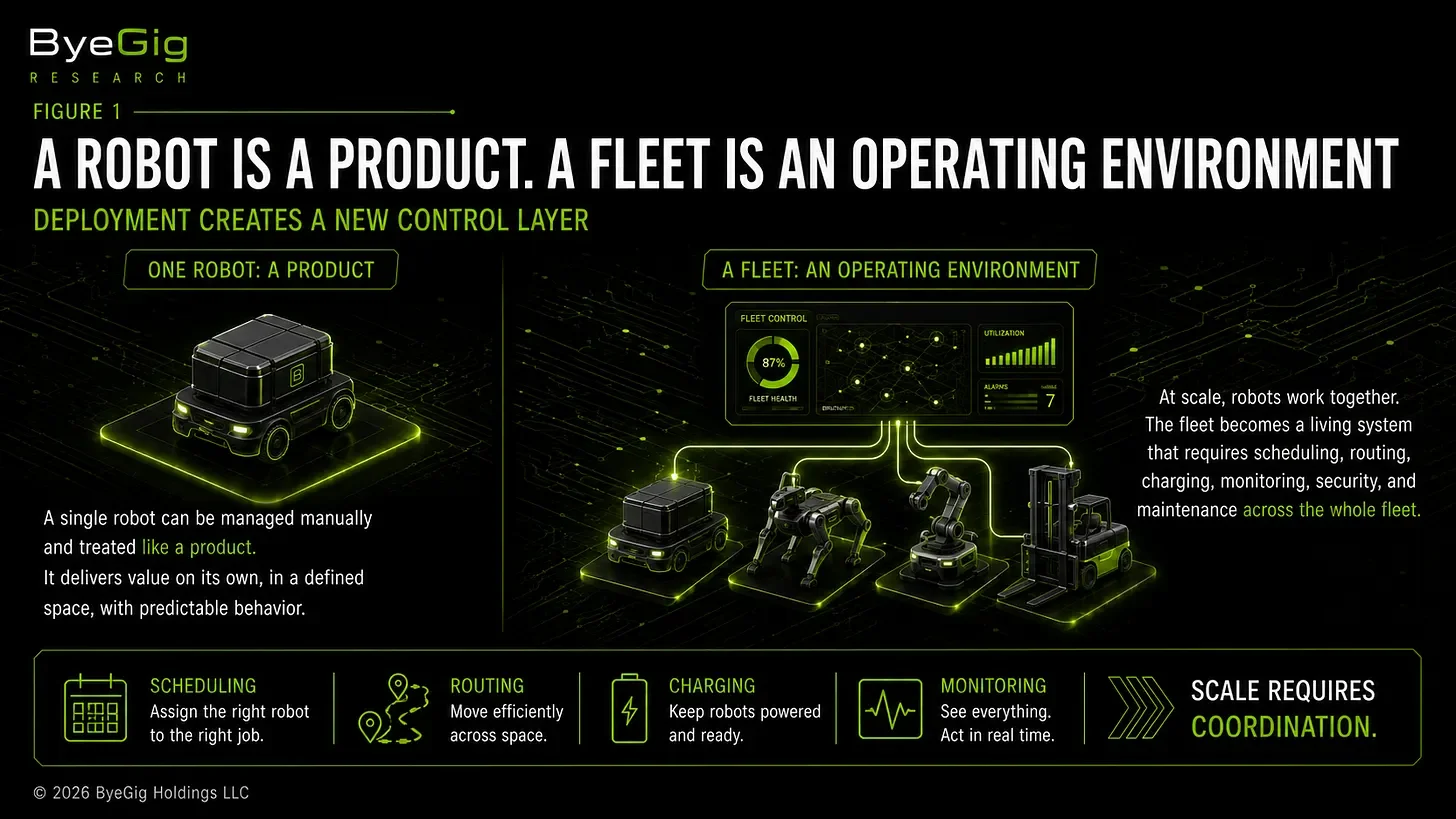
The deeper commercial challenge begins when robots leave controlled demonstrations and enter permanent operations. A company using hundreds of machines across several factories or warehouses must decide how work is assigned, how routes are coordinated, when batteries are charged, which software versions are approved, and how failures are contained without interrupting the rest of the fleet.
Those responsibilities create a layer of infrastructure above the machine itself.
A Robot Is a Product. A Fleet Is an Operating Environment.
A business can manage one or two experimental robots manually. That approach breaks down when machines become part of daily production. At scale, operators need a common system for scheduling work, monitoring performance, handling maintenance, enforcing permissions, and coordinating machines supplied by different manufacturers.
This is where robotics begins to resemble earlier computing markets. Hardware created the foundation, but operating systems and management platforms made large deployments practical. Cloud infrastructure followed a similar path. The servers mattered, yet the software used to provision, monitor, secure, and coordinate them became a major market of its own.
Robotics is likely to follow the same pattern. The companies with the largest influence may include manufacturers, but they may also include platforms that remain useful across many robot brands and machine types.
A fleet-management system does not need to win the hardware race to become important. It needs to become the environment through which customers operate their machines.
Deployment Changes the Economics
Hardware revenue often begins with the sale of the machine. The longer commercial relationship may come from software, monitoring, maintenance, analytics, security, charging, and operational support.
That distinction matters because robot manufacturers will face pressure from production costs, component availability, warranties, inventory, and competition from newer models. A control platform may have a different economic profile. Once connected to a customer’s production schedules, enterprise systems, security policies, and facility data, replacing it can be difficult and disruptive.
The platform may also support equipment from several manufacturers. A company that builds one robot sells primarily into the market for that machine. A company that coordinates many machines can participate across a much broader installed base.
This does not make the hardware less important. It means the complete robotics market extends well beyond the machine.
Factories Will Need a Common Control Layer
Industrial facilities are unlikely to rely on one type of robot. A modern factory may use autonomous mobile robots, robotic arms, inspection systems, humanoid machines, drones, and specialized equipment supplied by several vendors.
Without coordination, each system becomes another isolated technology project. The greater opportunity is to create an operating layer that connects these machines to production requirements and allows the facility to manage them as a combined workforce.
That layer must understand which machines are available, what they are permitted to do, how urgent each task is, and how actions in one part of the facility affect another. It must also provide human operators with enough visibility to intervene when necessary without requiring continuous manual control.
This is the commercial territory represented by a domain such as ManufacturingControlPlane.com. The name does not describe one robot or one production line. It describes the system responsible for coordinating the wider environment.
Robot Fleets Will Become Infrastructure
The term “fleet” is important because it changes how buyers think about robotics. Companies do not evaluate a fleet only by asking whether one machine works. They consider utilization, uptime, maintenance, energy use, security, labor integration, and performance across the entire operation.
Those requirements favor companies that can provide consistent management across locations and equipment types. A platform capable of coordinating a fleet can become embedded in the customer’s operating structure. It may eventually function less like a robotics application and more like industrial infrastructure.
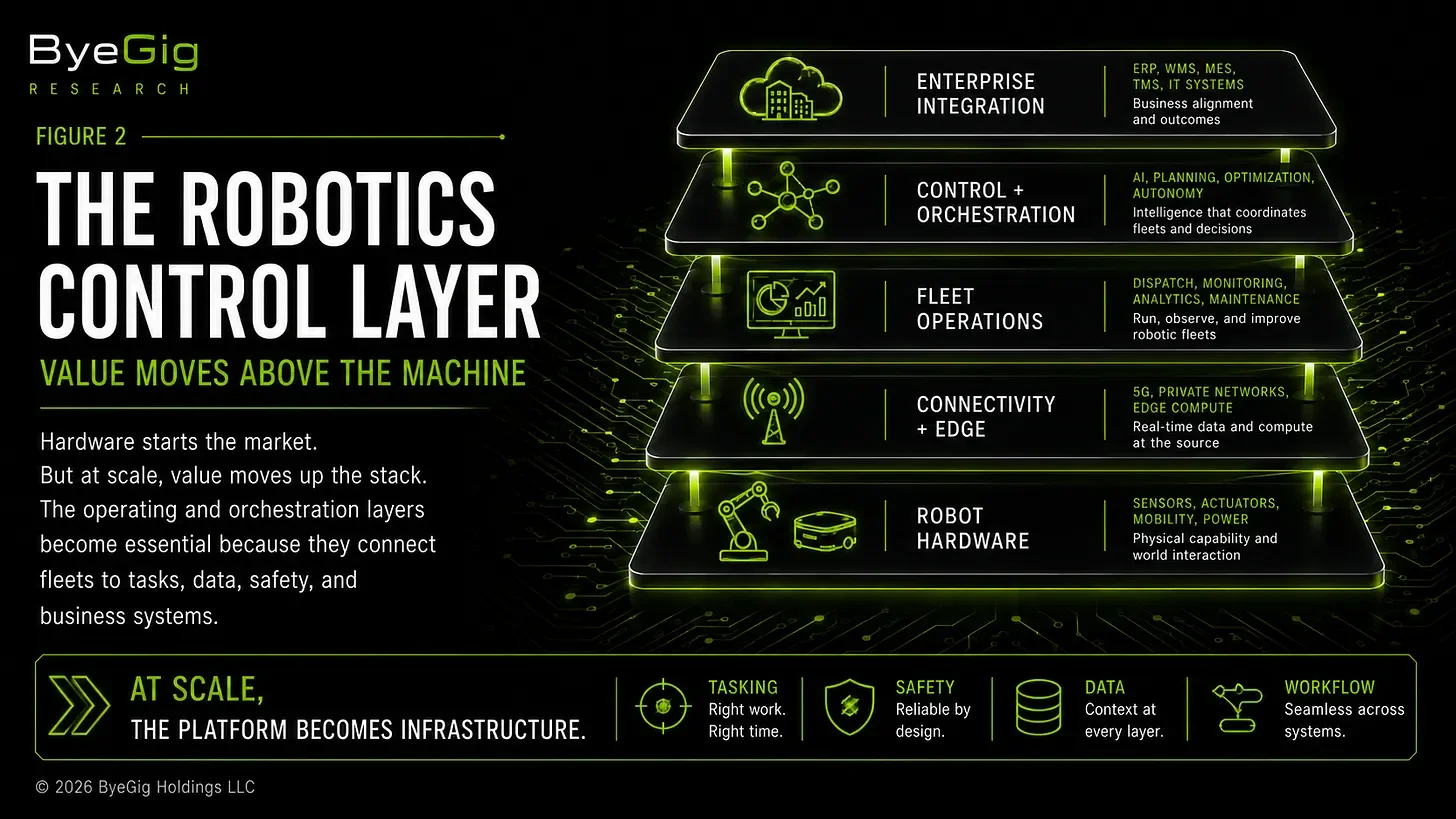
RobotFleetOperatingSystem.com captures that broader role. It describes a category that becomes relevant when machines are no longer treated as individual tools and instead operate as a managed system.
The strongest robotics platforms may also become marketplaces for applications, maintenance providers, data services, replacement components, and specialized skills. Once the operating layer controls access to the fleet, it can become the point through which other products and services reach the customer.
Humanoids Will Face the Same Operational Reality
Humanoid robots attract unusual attention because their appearance makes the technology easier to imagine in familiar environments. The operational questions, however, are not fundamentally different.
A business deploying humanoids will still need to assign work, manage charging, verify software, monitor performance, limit access, diagnose failures, and determine when a person should take control. These requirements become more important, not less, when machines can move through facilities designed for people.
Humanoids may eventually perform a wider range of tasks than many existing robots, which increases the need for formal coordination. A flexible machine can create more value, but it can also interact with more systems, enter more locations, and make more consequential decisions.
The control environment must grow alongside that capability.
ByeGig’s Position
ByeGig’s robotics portfolio is built around the infrastructure required after machines move from demonstration to deployment. The focus is not limited to predicting which robot manufacturer will lead a particular product cycle. It includes the operating systems, control planes, deployment platforms, and fleet infrastructure that many manufacturers and customers may eventually require.
RoboticsControlPlane.com represents that thesis directly. It names the layer responsible for turning independent machines into a coordinated operational system.
The robot will remain the most visible part of the industry. The larger and more durable business may be the platform through which every robot is managed.
