
AI’s Next Market May Trade Power, Compute, and Capacity Together
The data-center buildout is connecting two previously separate industries and creating demand for new exchanges, operating systems, and coordination platforms.
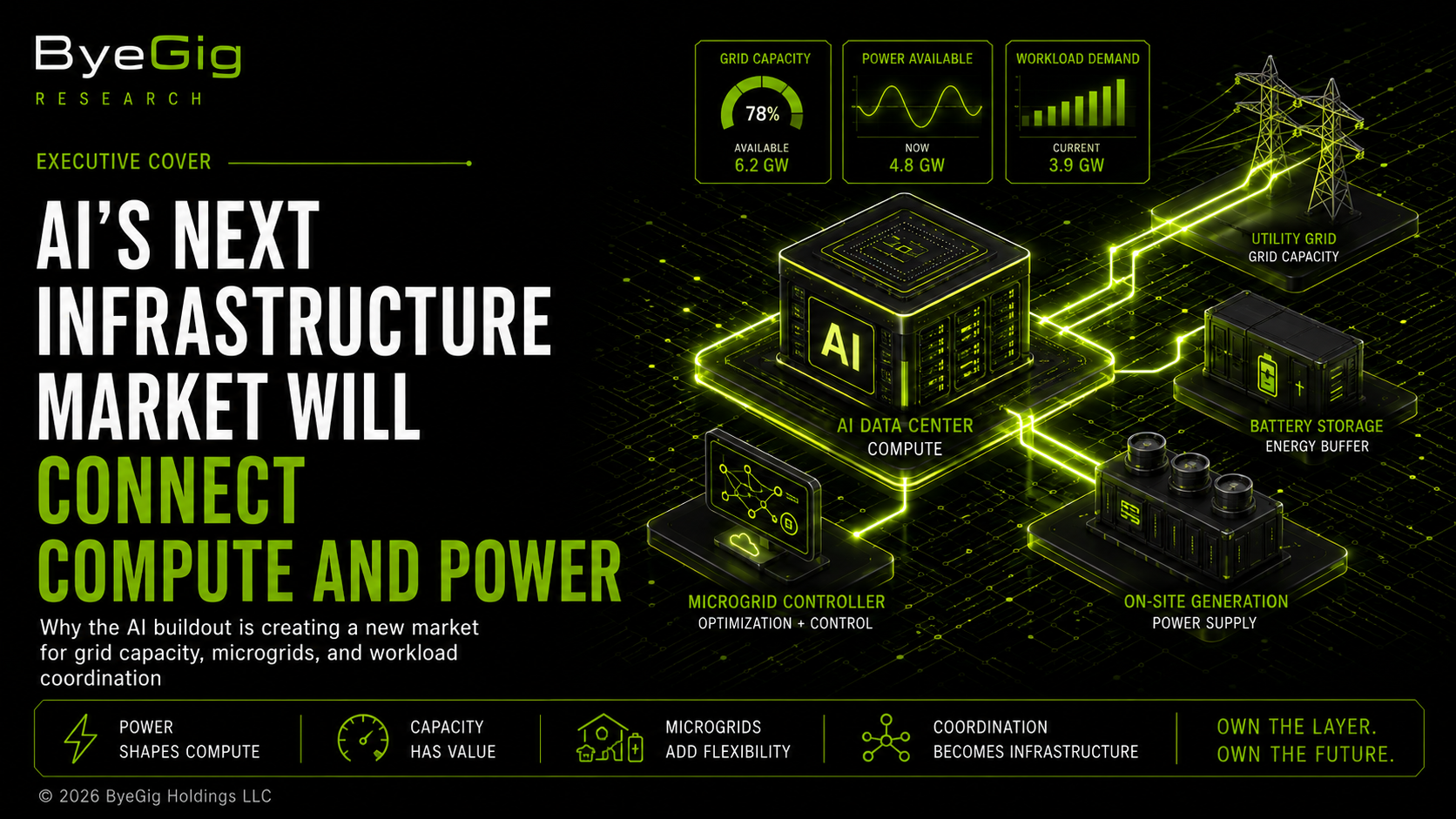
The rapid expansion of artificial intelligence is often described through chips, models, and data centers. The limiting factor is increasingly found outside the traditional technology sector.
Every computing cluster depends on electricity, grid connections, transformers, cooling, backup generation, land, and regulatory approval. A developer may be able to secure the servers and financing for a project long before the local power system can support it. In many regions, the schedule for electricity infrastructure now matters as much as the schedule for technology procurement.
This changes the nature of the AI buildout. Compute and power can no longer be treated as separate planning exercises.
Compute Has Always Been Physical
Cloud computing made processing capacity appear detached from location. Customers could request resources without needing to know which building, power plant, transformer, or transmission line supported the workload.
That abstraction was commercially useful, but it never removed the physical requirements. Every workload runs in a particular facility with a specific energy price, climate, cooling system, grid connection, and equipment constraint.
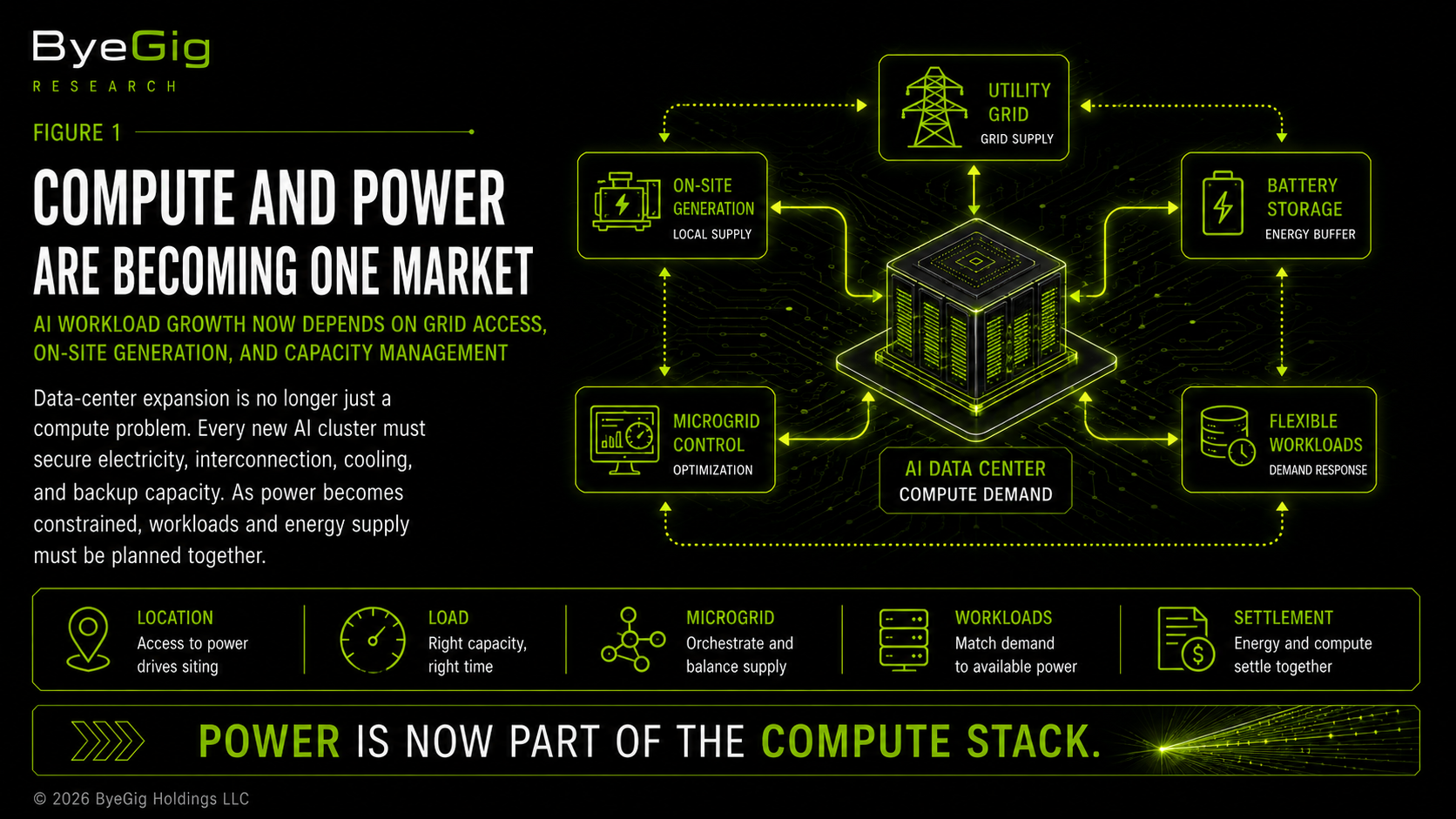
The difference today is scale. When data centers require far larger amounts of electricity, local conditions become harder to hide behind a cloud interface. The availability of power can determine where computing capacity is built, how quickly it comes online, and how much it costs to operate.
This may eventually affect how workloads are assigned. A flexible computing task could be delayed or moved when electricity is expensive or the grid is under pressure. Another workload may require immediate processing regardless of local conditions. Platforms will need to evaluate both technical requirements and energy conditions before deciding where each task should run.
Workload orchestration is therefore becoming partly an energy-management problem.
Capacity Has Several Meanings
The AI infrastructure market is constrained by more than electricity generation. Developers also need grid interconnections, transformers, substations, turbines, cooling systems, available buildings, network connections, and computing equipment.
Each form of capacity may be controlled by a different party. Utilities manage electrical infrastructure. Developers control sites and facilities. Cloud companies operate computing clusters. Equipment manufacturers allocate production slots. Energy companies control generation.
These resources must somehow be matched with projects and customers.
At first, this coordination may happen through private agreements and specialized advisory firms. Over time, larger transaction volumes and more standardized contracts may support marketplaces or exchanges connecting infrastructure owners, energy suppliers, developers, and computing customers.
ComputeEnergyMarket.com describes this possibility without tying it to a single generation technology. The market could include natural gas, nuclear power, batteries, fuel cells, renewable energy, or conventional utility supply. Its defining function would be connecting computing demand with available energy.
Microgrids Move Into the Main Plan
Data centers have traditionally used backup generation as insurance against outages. The current power shortage is pushing on-site energy closer to the center of project design.
A microgrid can combine utility power, dedicated generation, batteries, and other resources within one controlled system. For an AI facility, this can reduce dependence on the timing of conventional grid expansion and provide more control over reliability and cost.
Operating that system is complex. The facility must determine when to draw power from the grid, when to generate on-site, when to charge or discharge batteries, and how much reserve capacity to maintain. It may also need to reduce or move computing workloads when power is limited.
That creates a role for MicrogridOperatingSystem.com. The name describes the software layer responsible for coordinating generation, storage, grid interaction, and demand within a facility or group of facilities.
This operating layer may become especially important when data centers use several energy sources rather than relying on one utility connection.
Grid Access May Become a Competitive Advantage
For much of the technology sector, grid access was treated as a background requirement. It is becoming a strategic asset.
A site with an existing interconnection, available transformer capacity, or nearby generation may be more valuable than a site with cheaper land but no realistic path to power. Companies that secure these resources early can move faster than competitors even when both have access to similar computing equipment.
Scarcity also encourages new commercial arrangements. A facility with unused electrical or computing capacity may be able to provide it to another party. Developers may reserve capacity before they need it. Energy suppliers may design generation directly around large computing customers. Utilities may develop new rate structures for workloads that can reduce demand when the grid is strained.
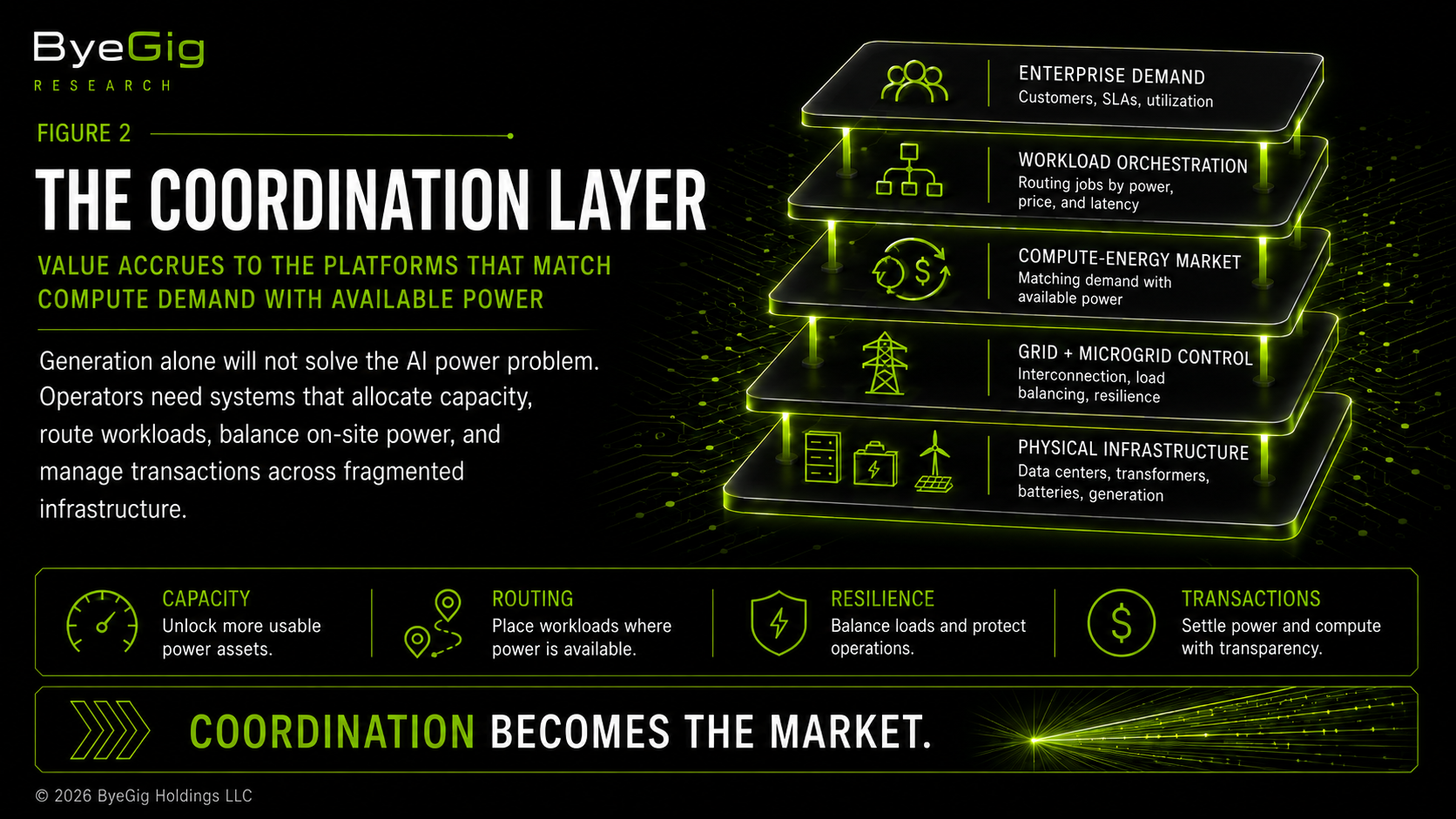
These arrangements require measurement, contracting, coordination, and settlement. They also create opportunities for companies that do not own the underlying data center or power plant but provide the system through which resources are allocated.
GridCapacityExchange.com represents this transaction layer. The name applies to a market in which grid access and electrical capacity become resources that can be matched with buyers and projects.
The Market Will Need Neutral Platforms
Many participants in the AI infrastructure market have conflicting interests. Utilities need to protect grid reliability. Data-center developers want faster connections. Energy producers want long-term customers. Cloud providers need dependable capacity. Communities want economic development without absorbing every cost of the project.
A neutral platform can help coordinate these interests by standardizing information and making available capacity easier to identify. It could provide pricing, availability, project requirements, contract terms, and settlement support across several types of infrastructure.
The earliest versions may operate as private networks rather than open exchanges. The important point is that coordination itself becomes a business.
This pattern has appeared in freight, energy, telecommunications, financial markets, and cloud computing. When infrastructure becomes more complex and participants need to transact across fragmented systems, a new coordination layer often develops.
AI infrastructure is creating those conditions now.
ByeGig’s Position
ByeGig has built its compute-energy portfolio around the systems that may connect electricity, computing capacity, grid access, and infrastructure transactions. The thesis does not require one particular energy source or data-center design to dominate.
The common need is coordination.
AI facilities must secure power, allocate workloads, manage local generation, and operate within grid constraints. As the market expands, companies will need clear names for the platforms managing those functions.
The next major AI infrastructure company may not build a model, manufacture a chip, or own a power plant. It may operate the market connecting all three.
