
Infrastructure Thesis Series: Energy Systems
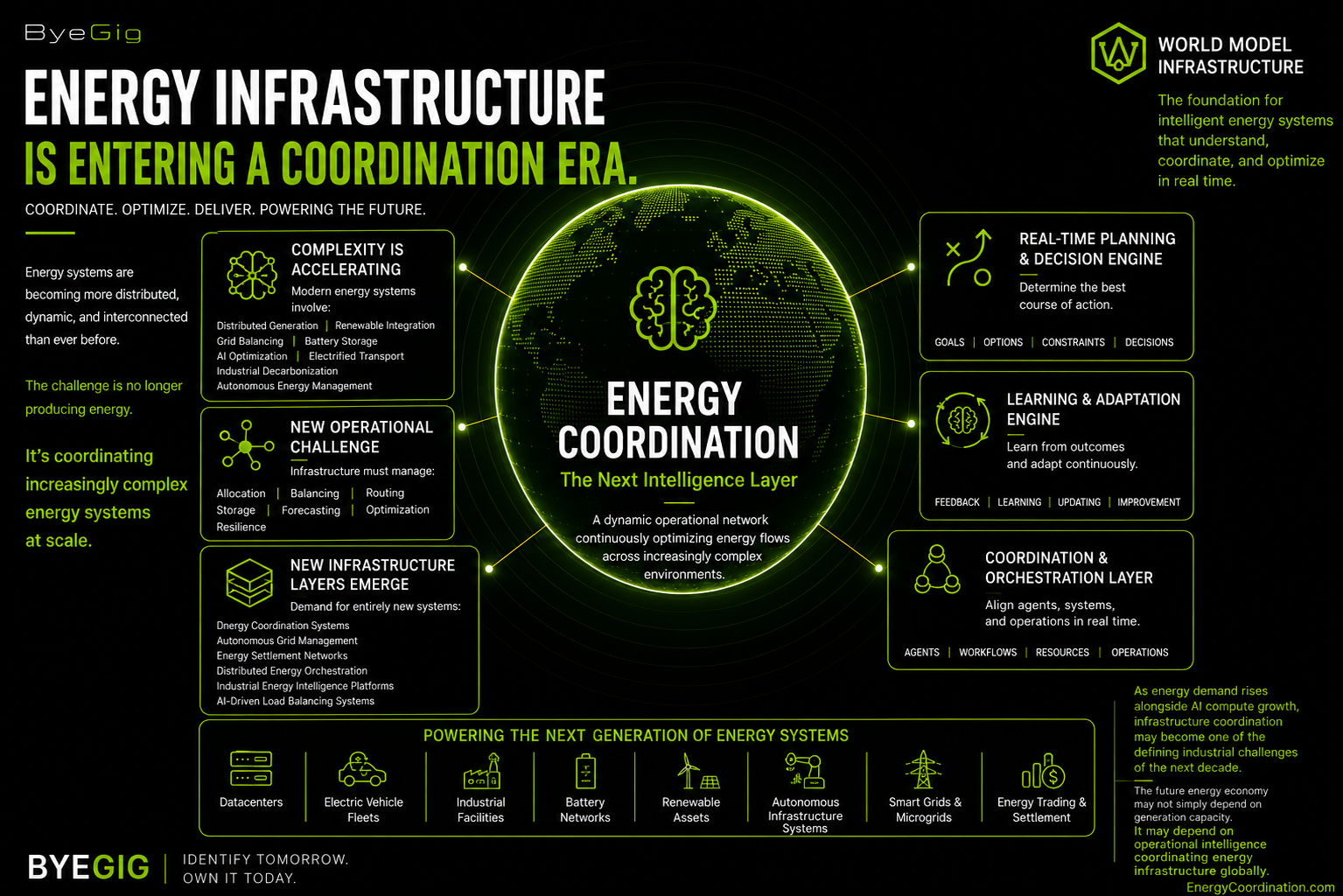
Energy infrastructure is entering a coordination era.
Historically, energy systems were relatively centralized and predictable: power generation flowed through stable grids, industrial demand changed gradually, and infrastructure planning operated on multi-decade cycles.
That environment is changing rapidly.
Modern energy systems increasingly involve: • distributed generation • renewable integration • grid balancing • battery storage • AI-driven optimization • electrified transportation • industrial decarbonization • autonomous energy management
This creates enormous operational complexity.
The challenge is no longer simply producing energy.
It is coordinating increasingly dynamic energy systems at scale.
As grids become more distributed and interconnected, infrastructure capable of managing: • allocation • balancing • routing • storage • forecasting • optimization • resilience
becomes strategically critical.
This transition creates demand for entirely new infrastructure layers: • energy coordination systems • autonomous grid management • energy settlement networks • distributed energy orchestration • industrial energy intelligence platforms • AI-driven load balancing systems
Energy infrastructure increasingly resembles a real-time operational network.
The strategic value shifts toward the systems coordinating energy flows across increasingly complex environments.
AI may become foundational to this transition.
Future energy systems may require continuous optimization across: • datacenters • electric vehicle fleets • industrial facilities • battery networks • renewable assets • autonomous infrastructure systems
As energy demand rises alongside AI compute growth, infrastructure coordination may become one of the defining industrial challenges of the next decade.
The future energy economy may not simply depend on generation capacity.
It may depend on operational intelligence coordinating energy infrastructure globally.
ByeGig
