
Infrastructure Thesis Series: The Financial Settlement Transition
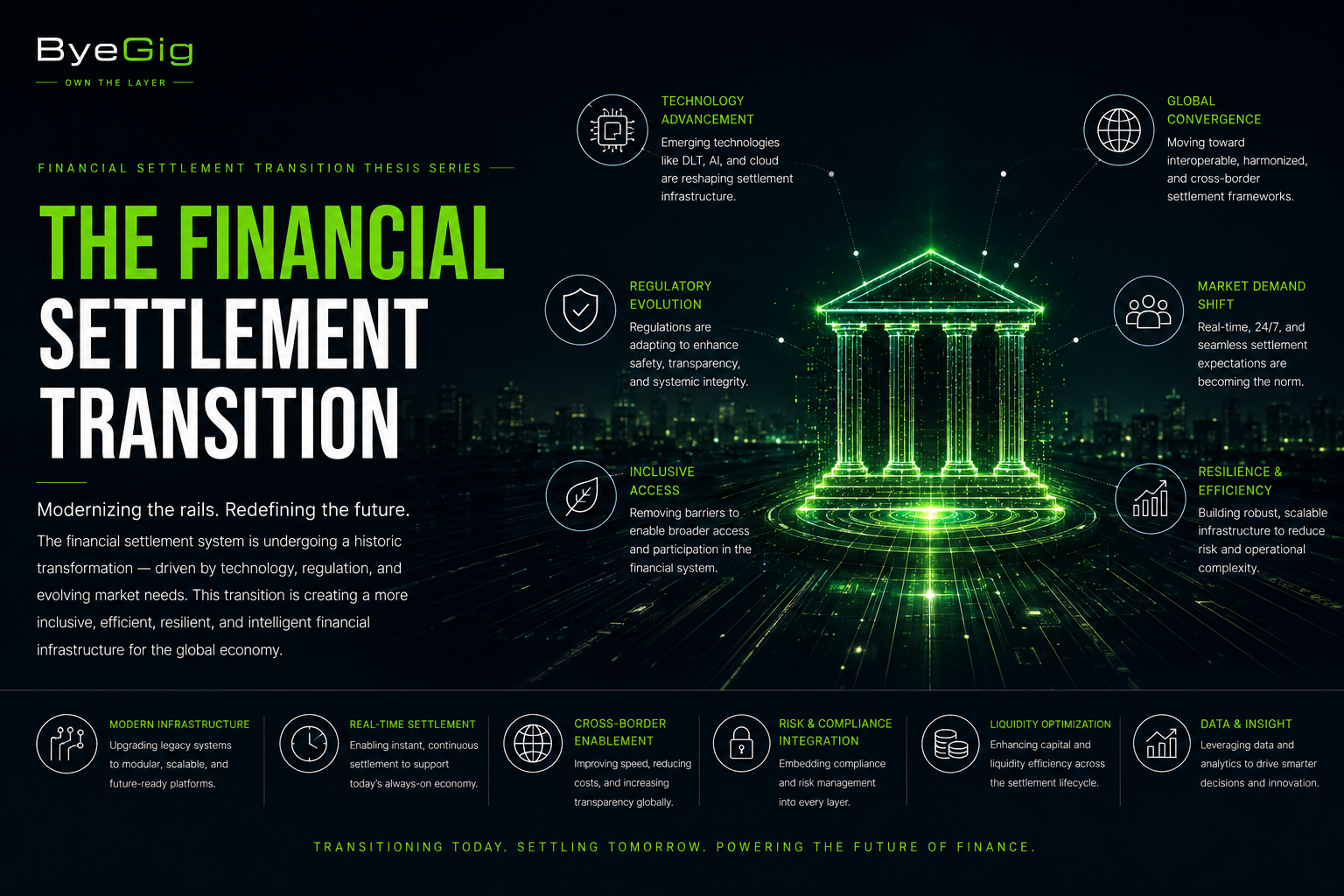
Global financial infrastructure is entering a structural transition period.
The next generation of settlement systems may look fundamentally different from the frameworks that have governed global finance for decades.
As capital flows become increasingly digital, real-time, automated, and globally interconnected, pressure is building around the underlying infrastructure coordinating how value moves between institutions, markets, commodities, currencies, and sovereign systems.
The modern financial system increasingly depends upon: • real-time settlement infrastructure • liquidity coordination systems • cross-border payment networks • digital asset infrastructure • commodities settlement systems • clearing architecture • treasury coordination • institutional transaction routing • collateral infrastructure • global liquidity networks • financial orchestration systems
The moment financial systems begin operating continuously across digital and programmable environments, entirely new infrastructure requirements emerge.
Legacy financial architecture was built around slower settlement cycles, fragmented banking systems, regional clearing processes, and limited interoperability between markets.
The next generation of financial infrastructure may require: • continuous settlement systems • programmable liquidity layers • institutional coordination platforms • automated treasury infrastructure • cross-network settlement routing • digital collateral systems • sovereign financial infrastructure • real-time clearing architecture
Settlement is no longer simply a banking function.
It is becoming a strategic infrastructure layer.
Historically, the institutions controlling financial coordination layers have maintained enormous structural influence over global commerce.
Railroads transformed transportation infrastructure. Telecommunications transformed information infrastructure. Cloud systems transformed software infrastructure.
Artificial intelligence, digital assets, automated finance, and global capital digitization may now transform settlement infrastructure itself.
This transition extends beyond cryptocurrency markets alone.
Large institutions increasingly require infrastructure capable of coordinating transactions across commodities, energy systems, currencies, tokenized assets, banking systems, trading platforms, and international payment networks simultaneously.
That creates demand for: • settlement orchestration systems • liquidity coordination layers • institutional clearing infrastructure • global treasury systems • financial routing networks • transaction coordination platforms • monetary infrastructure systems • capital allocation architecture
The infrastructure challenge becomes substantially larger as financial systems move toward continuous global operation rather than isolated regional processing windows.
This may become one of the defining financial infrastructure transitions of the next decade.
The companies building coordination layers around liquidity movement, settlement routing, institutional clearing, and global financial interoperability may become foundational participants within future financial systems.
Historically, major infrastructure transitions create durable operational layers around the movement of critical resources: telecommunications around information, logistics around goods, cloud platforms around software, exchanges around capital formation.
The next financial era may create a similar coordination layer around settlement itself.
The eventual winners may not simply process transactions.
They may own the infrastructure systems coordinating how global capital moves across the modern economy.
ByeGig
